Index > GREATER BAY AREA INTERNATIONAL CLINICAL TRIAL INSTITUTE
Turning research into real-world impact
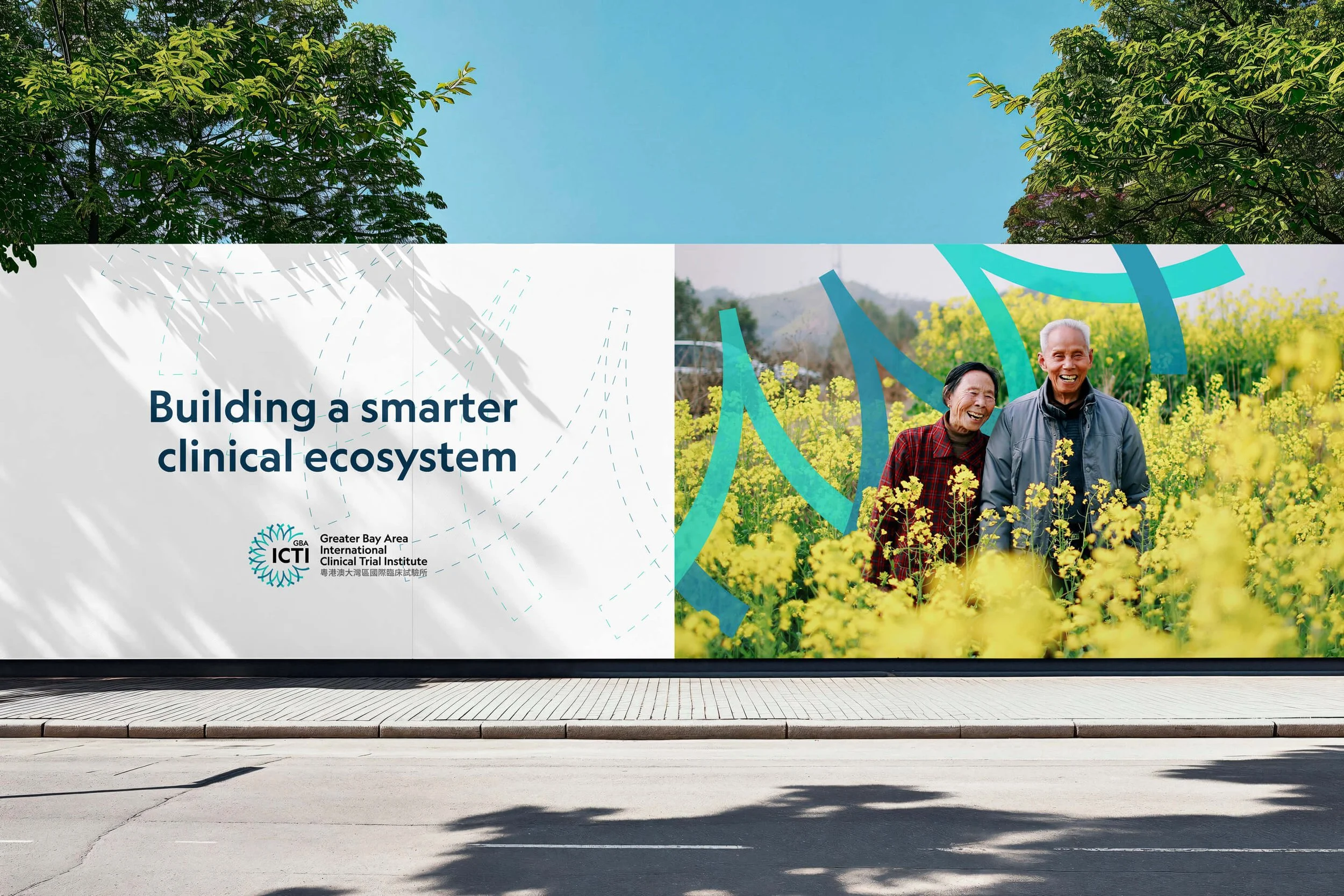
Context
The Greater Bay Area International Clinical Trial Institute (GBAICTI) is a one-stop platform that coordinates clinical trial resources across Hong Kong’s public and private sectors, including universities, the Hospital Authority, and private healthcare facilities.
GBAICTI is a government-backed, academically operated institute designed not just to conduct research but to genuinely transform the conditions under which research happens.
We were brought in by the newly formed team to create its visual identity.
Research
We came to the project, as we often do, with little knowledge of the industry. We’re far from medical professionals and, beyond a general understanding, we knew very little about how clinical trials and the ecosystem worked.
Before we could think about what GBAICTI should look like, we needed to understand what it actually did, why it was being established, and what role it hoped to play.
We did a tonne of research… And I mean a tonne…
We learnt about the Greater Bay Area and its growing importance to global medical research. We read about clinical trials and drug development, laboratories, pharmaceuticals, and medical technology. We explored some of the earliest recorded controlled medical experiments in China and the history of how medical knowledge has been documented and shared.
We went down a lot of rabbit holes, and some of it proved useful. Some of it didn’t.

The Greater Bay Area
The Guangdong-Hong Kong-Macao Greater Bay Area connects Hong Kong, Macao, and nine cities in Guangdong Province, with a population of more than 86 million people.
For clinical research, its scale creates enormous potential, but also complexity. Hong Kong brings international regulatory credibility, while Shenzhen and the mainland bring research infrastructure, scale and access to a vast patient population.
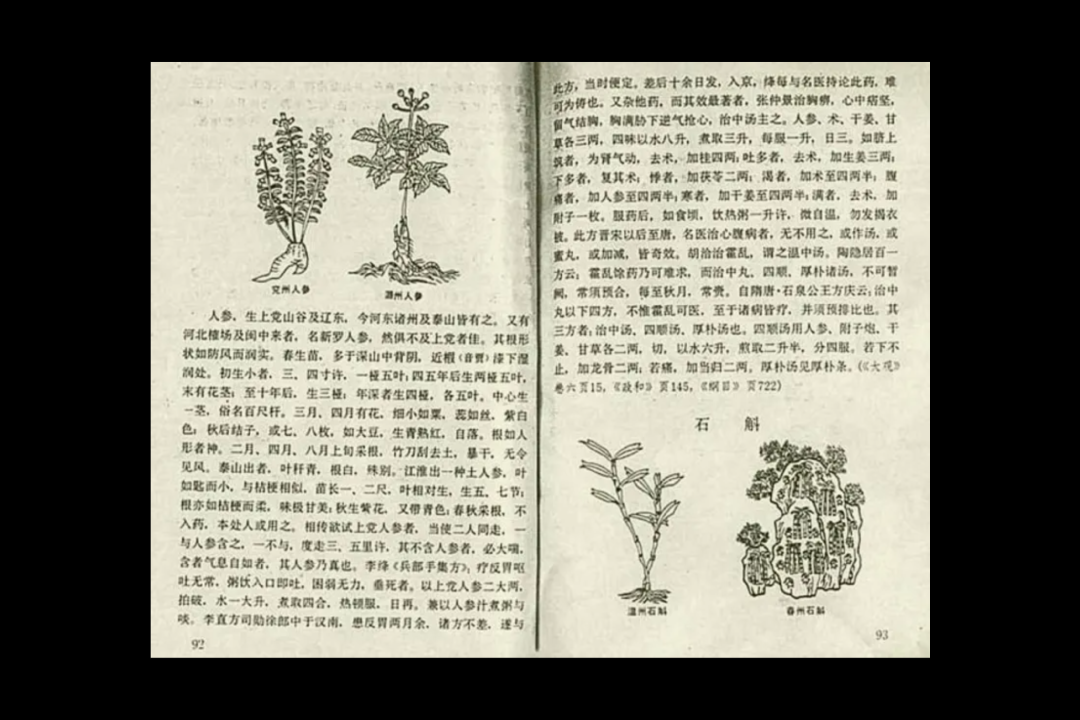
Early examples of clinical trials
One of the rabbit holes took us back to 1061 China and the Ben Cao Tu Jing (Atlas of Materia Medica), which records an experiment in which two men were asked to run, with only one given ginseng beforehand.
It is considered one of the earliest recorded examples of the principle of a control group, a principle that still underpins clinical trials today.
Image credits: Wellcome Collection

Clinical trials today
Today, clinical research is a huge and rapidly growing global industry, with Asia Pacific playing an increasingly important role.
Yet its visual language remains remarkably predictable: laboratories, data, molecules, technology. The human side, the patients, the communities affected, and the hope that research represents, is much less visible.
Direction
Our research gave us context, but the direction became much clearer once we got into a room with the GBAICTI team.
We presented our findings, our point of view for the institute, the competitive landscape, and the proposed brand framework, and discussed how GBAICTI sits between many different people and organisations. Researchers, clinicians, hospitals, universities, pharmaceutical companies, and the government all have a role to play in moving clinical research forward.
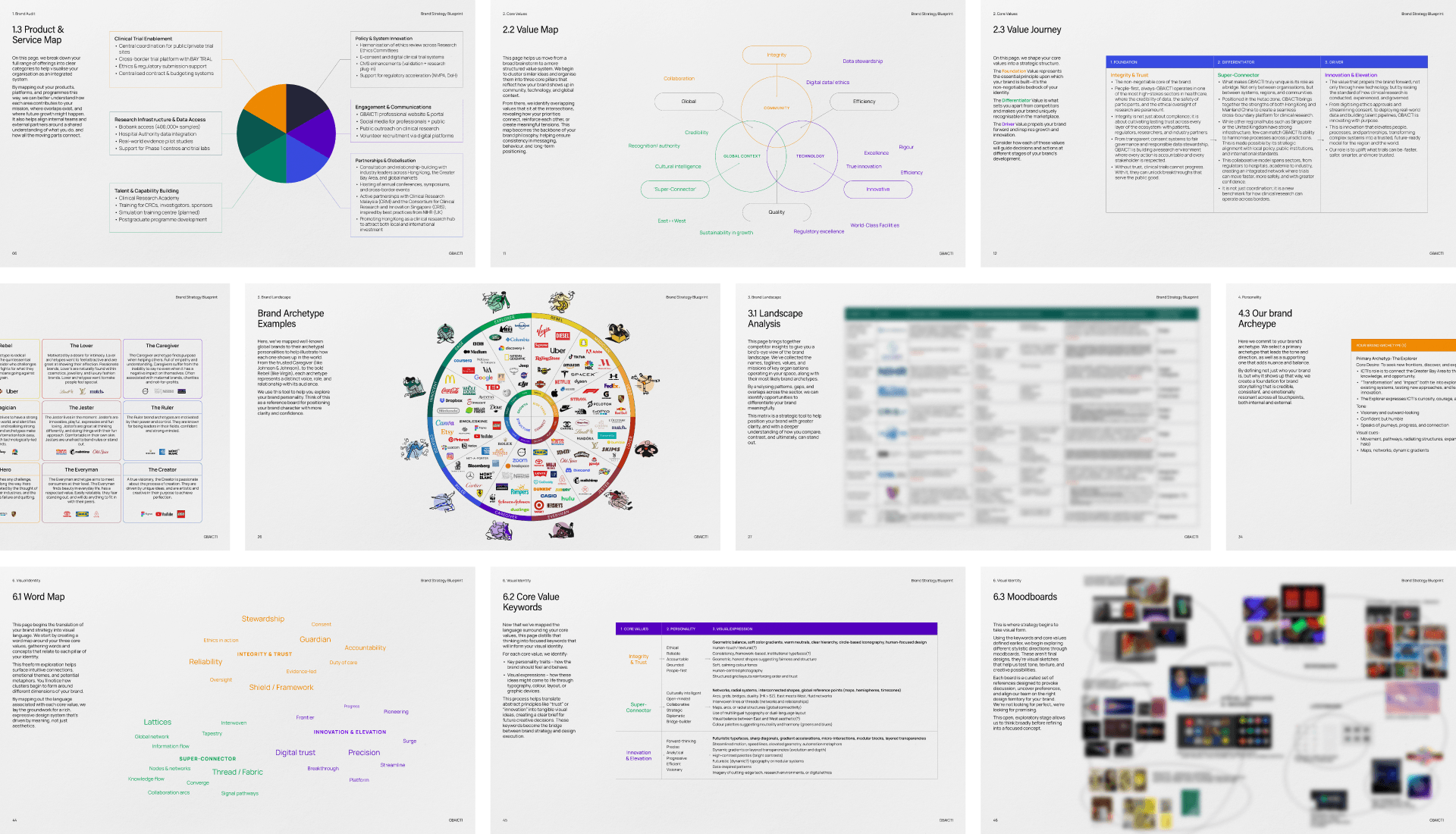
Presenting our drafted brand strategy deck, we shared and honed in on the bare bones of four values, which were further fleshed out during the meeting.
We kept coming back to people: the heart of clinical trials, the connectors, the researchers, the patients, and the patient-facing team. It is the people who inspire hope, who do the research, and who make discoveries that change lives.
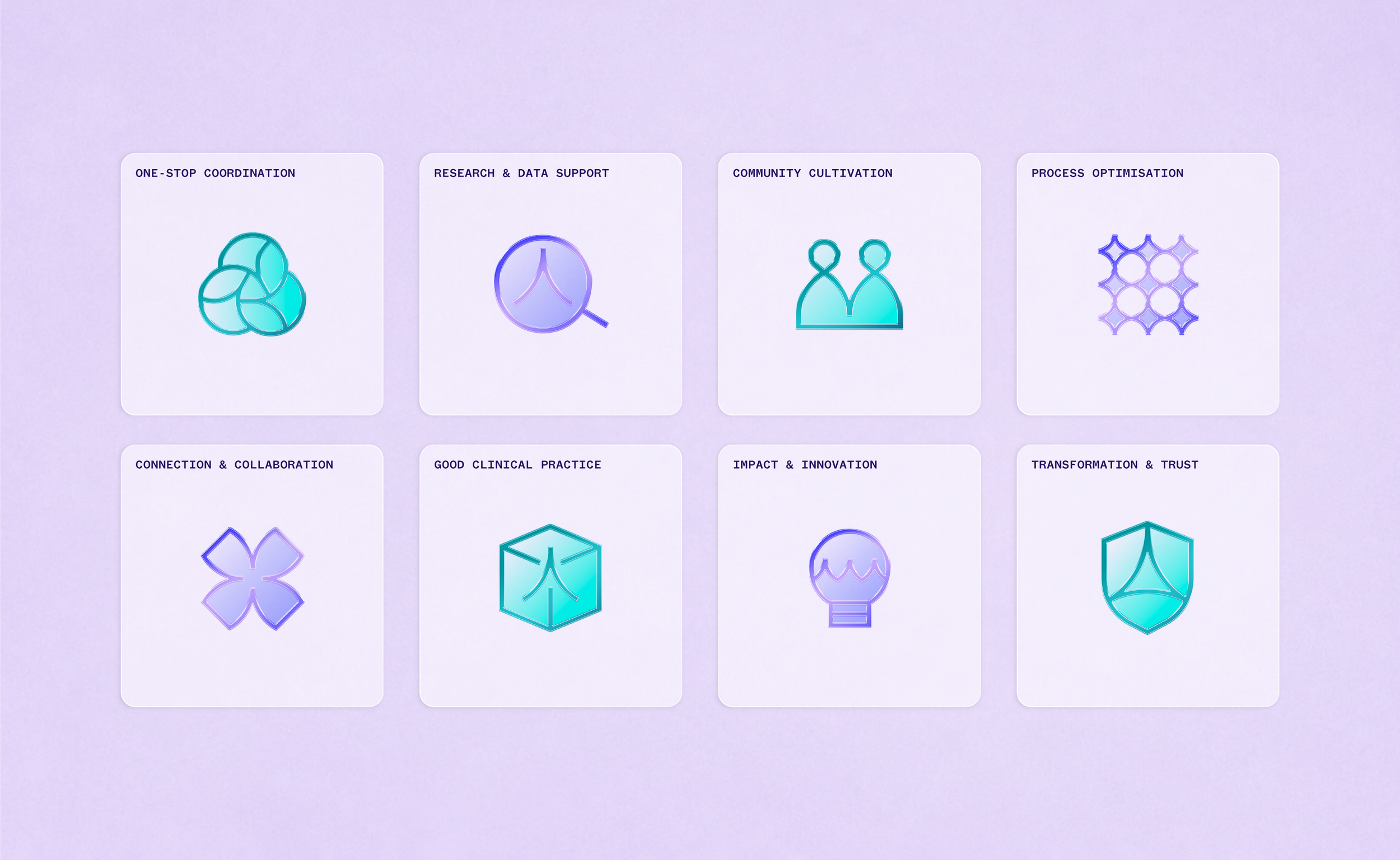
The four values centered around human connections, building trust in communities, and working between laboratories and front-line patient care.
Integrity & Good Clinical Practice
Clinical research is only valuable if it is trustworthy, and trust is built through the consistent application of internationally recognised standards. Good Clinical Practice is the foundation on which every partner relationship, every delivered outcome, and every assurance to a participant rests. The same standards are applied to every study, at every site, without exception.
Connection & Collaboration
The GBA’s greatest asset is its density. Within a compact geography, you have world-class universities, one of Asia’s most advanced hospital networks, a deep manufacturing base, and direct access to international markets. GBAICTI exists to activate that density, to bridge the fragmentation that has historically limited what the region could offer as a research environment, and to connect it with global networks. Collaboration here is structural, not aspirational.
Transformation & Trust
The landscape is shifting fast: digital trials, AI-assisted analysis, compressed timelines. The institute has been designed to move with that change rather than resist it. But transformation without trust creates instability. The two have to move together. As processes modernise and the ecosystem becomes more agile, the consistency that participants and partners depend on must remain constant.
Impact & Innovation
The measure of any clinical research institution is whether its work reaches patients. Discovery that stays in the laboratory, or research that never translates into accessible treatment, falls short. GBAICTI’s impact is measured in therapies approved, lives improved, and the region's growing contribution to global medical progress. Innovation is the engine; impact is the point.
Identity
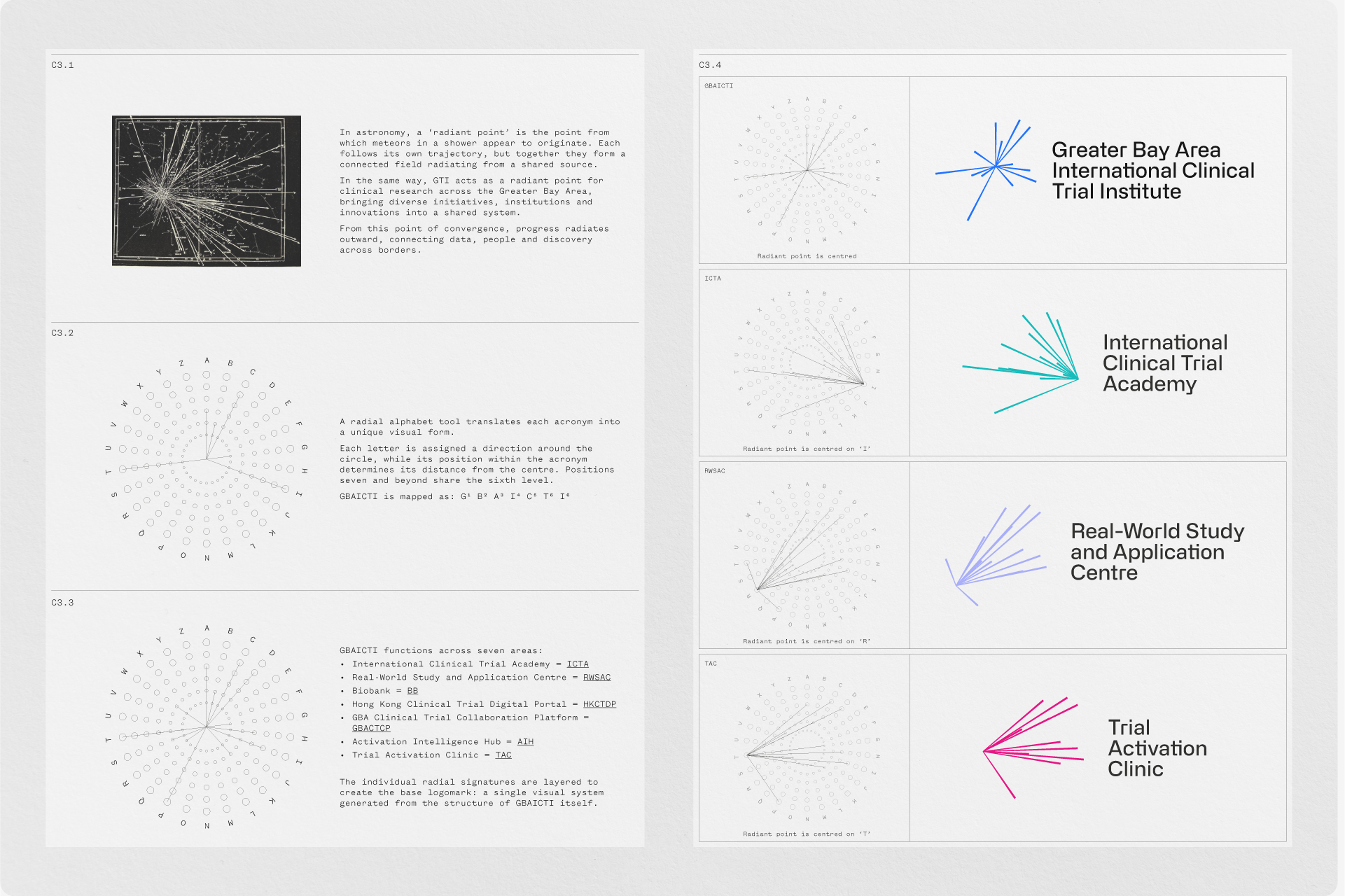
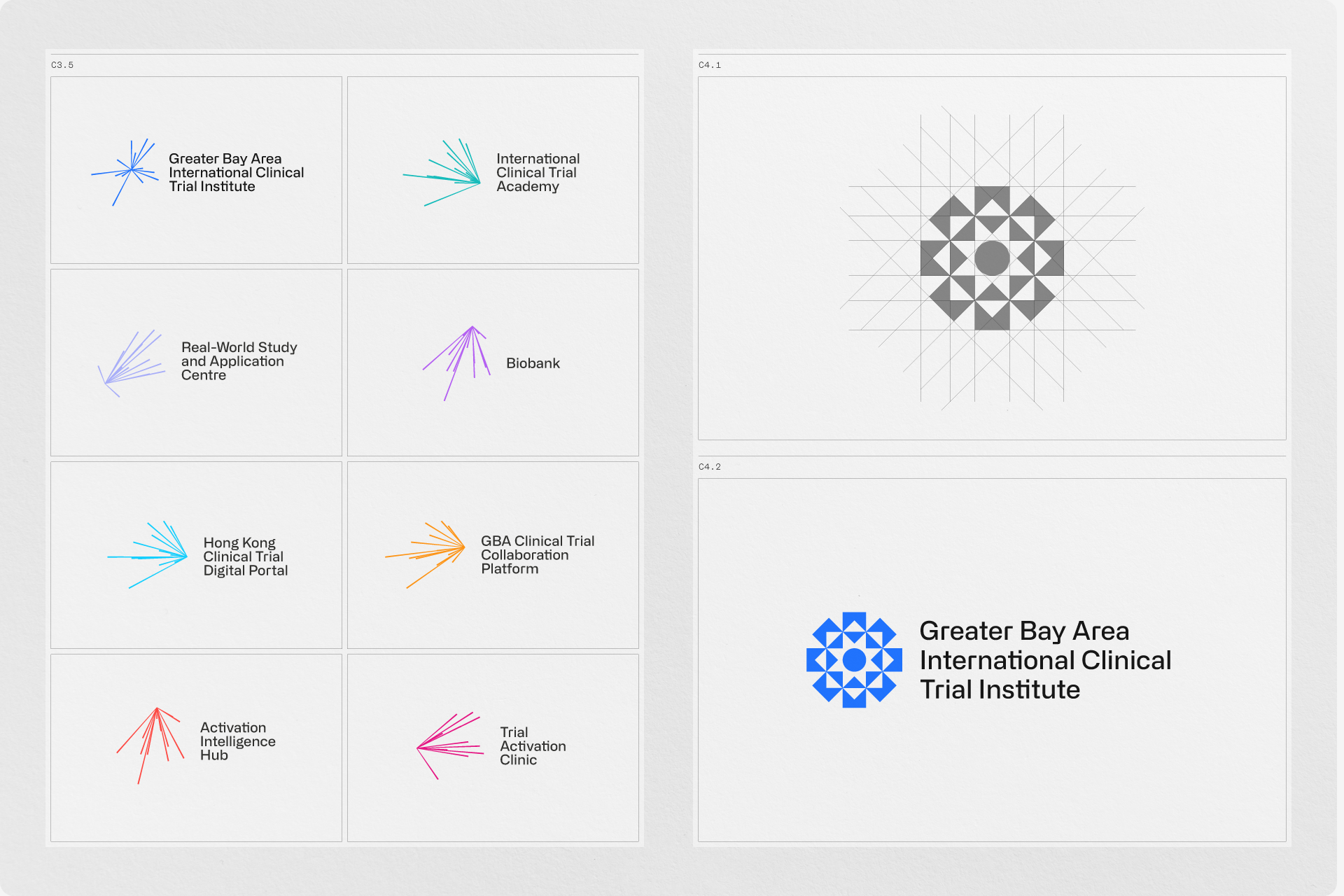
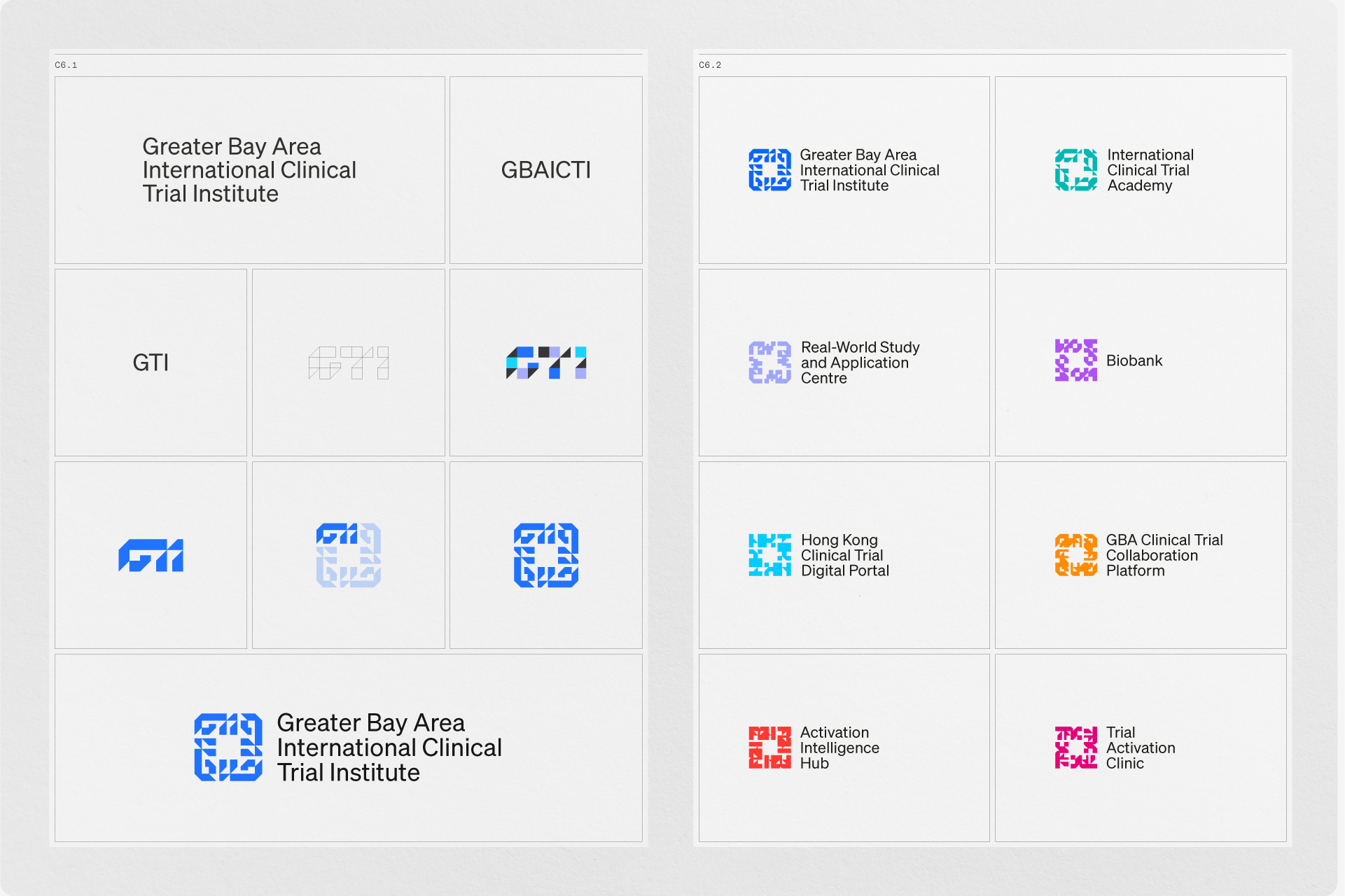
We began the identity phase with a clearer foundation and a few challenges. The name “Greater Bay Area International Clinical Trial Institute” is very long, and there’s no getting around this. The shared intention was to find a shorter name we could leverage in the logo. However, this proved difficult. GBAICTI meant very little to anyone. “GTI” was proposed by the team as a working name (“Greater Trials Institute”), and we started to visualise concepts based on it, with the intention of either proving it was a good solution or proving it wasn’t!
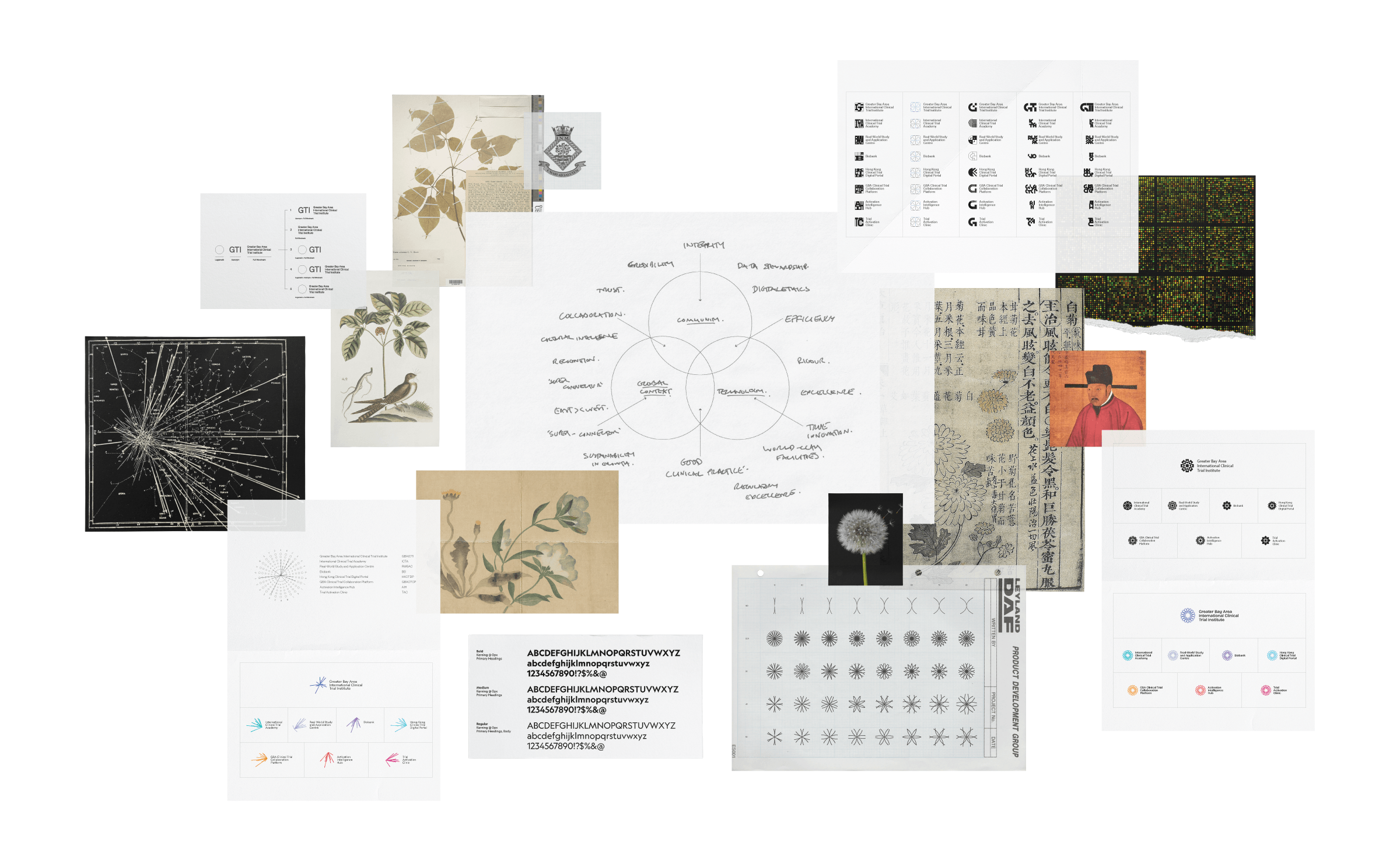
There was also the issue of the lockup components. We had to keep the full institute name, which could be split across three lines to maintain visual balance. The issue was that the team also wanted a logomark and an acronym, which would be either “GTI”, “GBAICTI”, or “GBA-space-ICTI”.
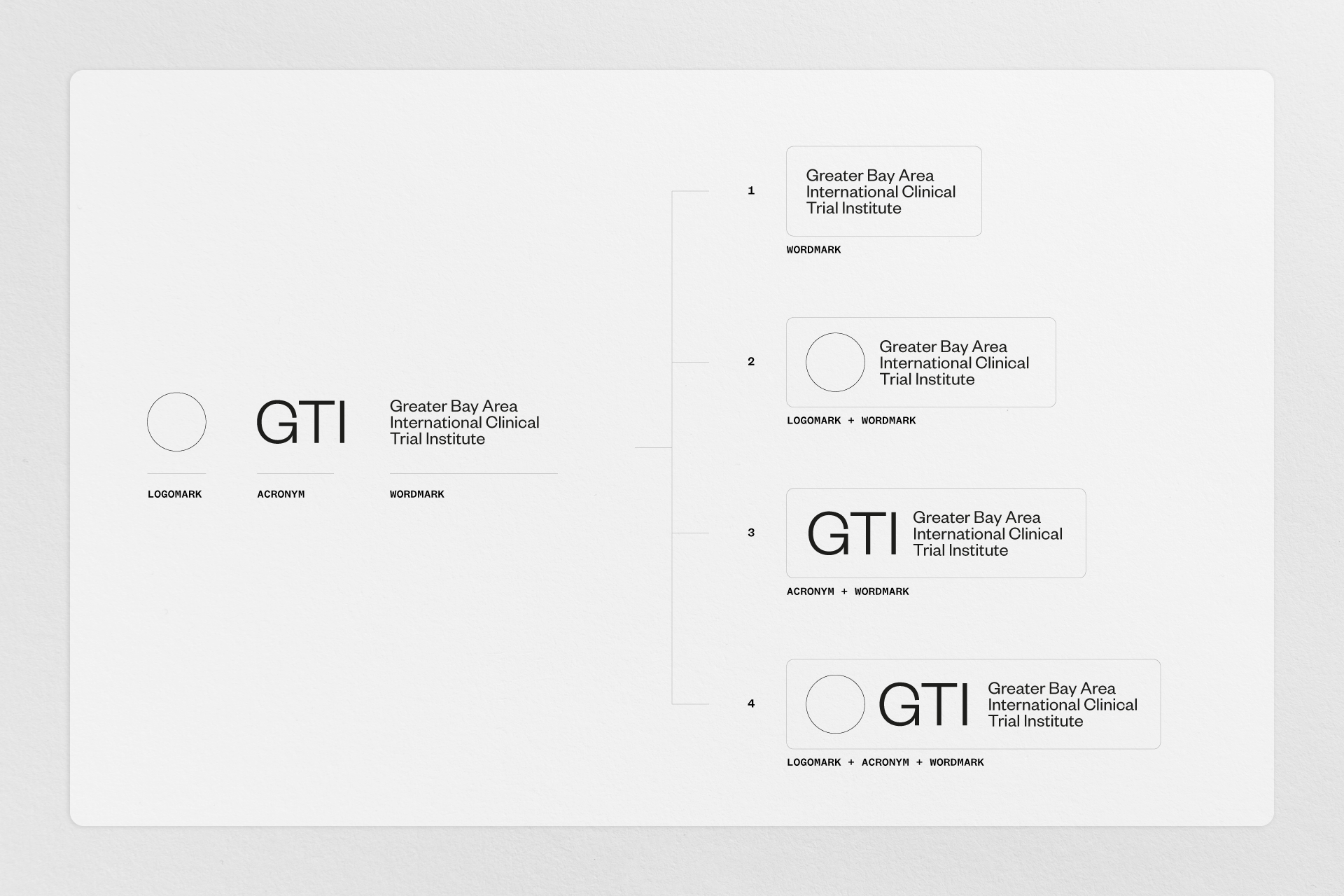
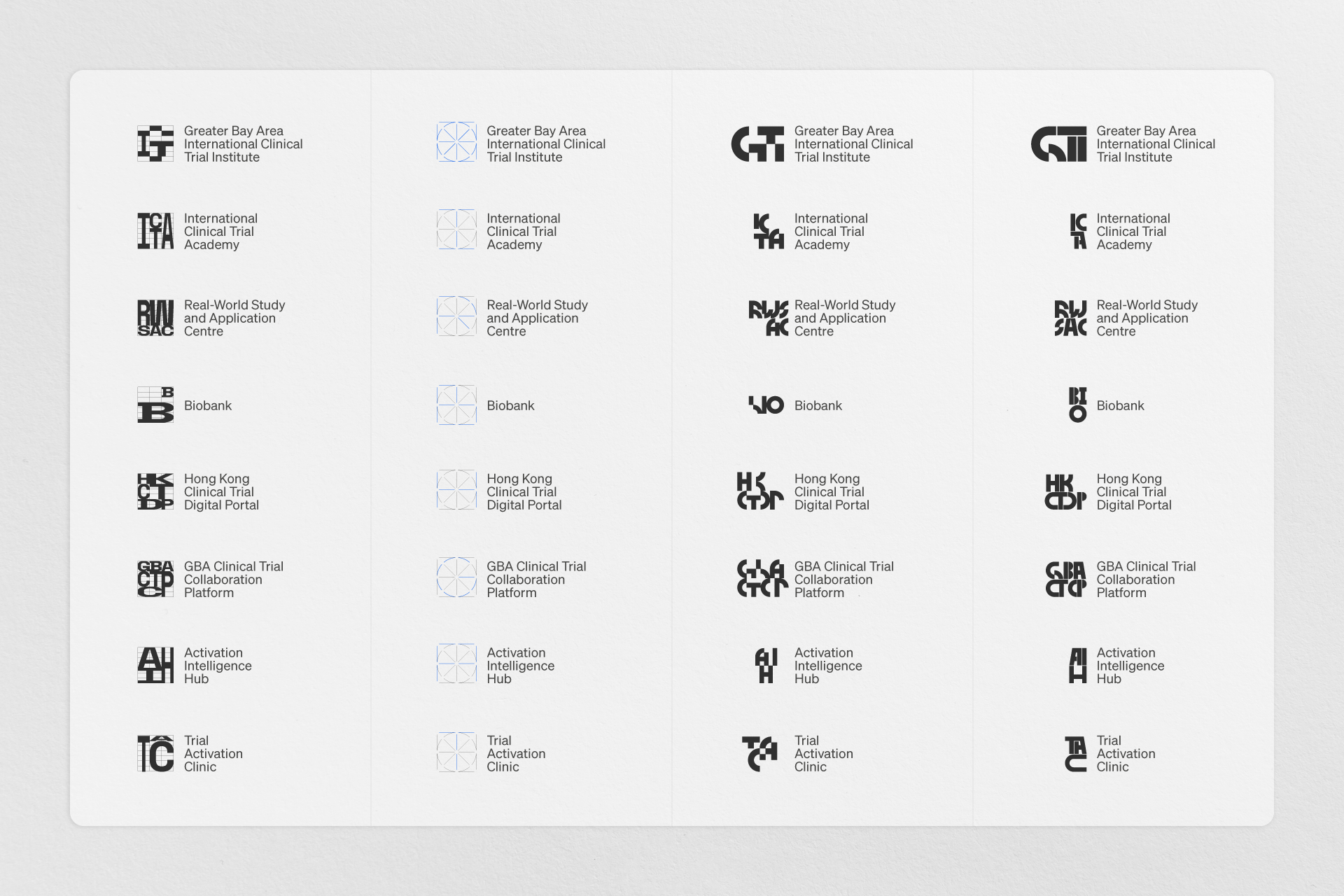
We quickly realised that effectively having two logomarks would feel somewhat clumsy and redundant. Because of this, we set to work to either prove or disprove if an acronym could be the logo, which could then be built out into systems of modular acronyms that could extend across the GBAICTI group.
Early creative work quickly made it clear this wasn’t going to be the solution, as the marks felt static and lacked personality.
As we started developing concepts, we realised it was rare to have the entire, newly formed project team together in a room twice in one month. The second meeting was an opportunity to align everyone on a single visual direction. We had the base of the strategy with our four values; now we needed to agree on the logo!
We came to the meeting armed to the teeth with concepts, in a 60-page concept deck. We presented more ideas than we usually would, as we were conscious of the need to align a diverse project team on a direction. With credit to the client, everyone was engaged and eager to both see what we’ve done and share their comments. This is an anxious part of all projects (for both the client and us!).
We had explored a lot and ended up committing a cardinal sin of branding, sharing more than just three ideas (heaven forbid!). We showed 6 fleshed-out concepts and had a lot of other undeveloped ideas up our sleeves in the annex, ready if none of them resonated.
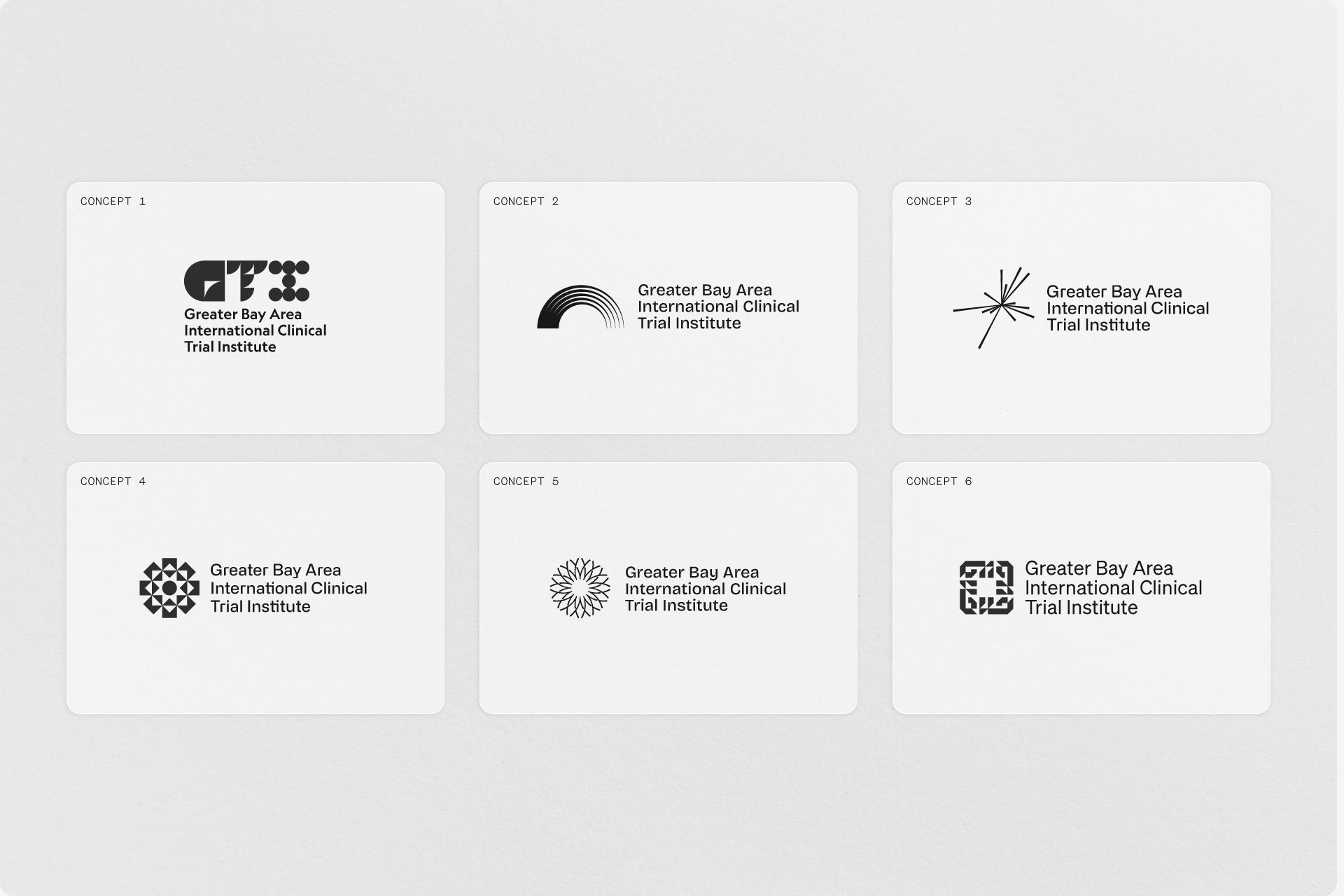
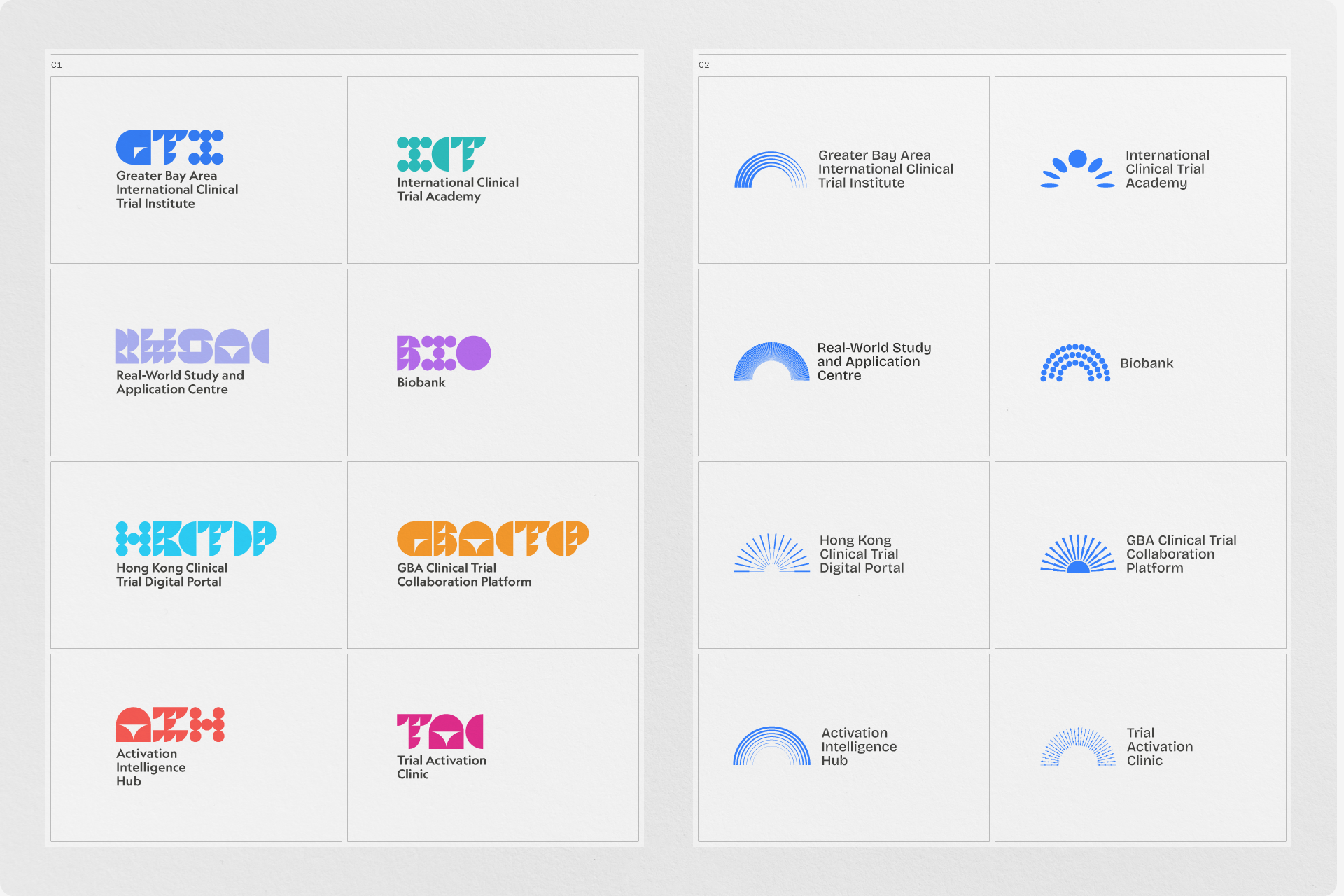
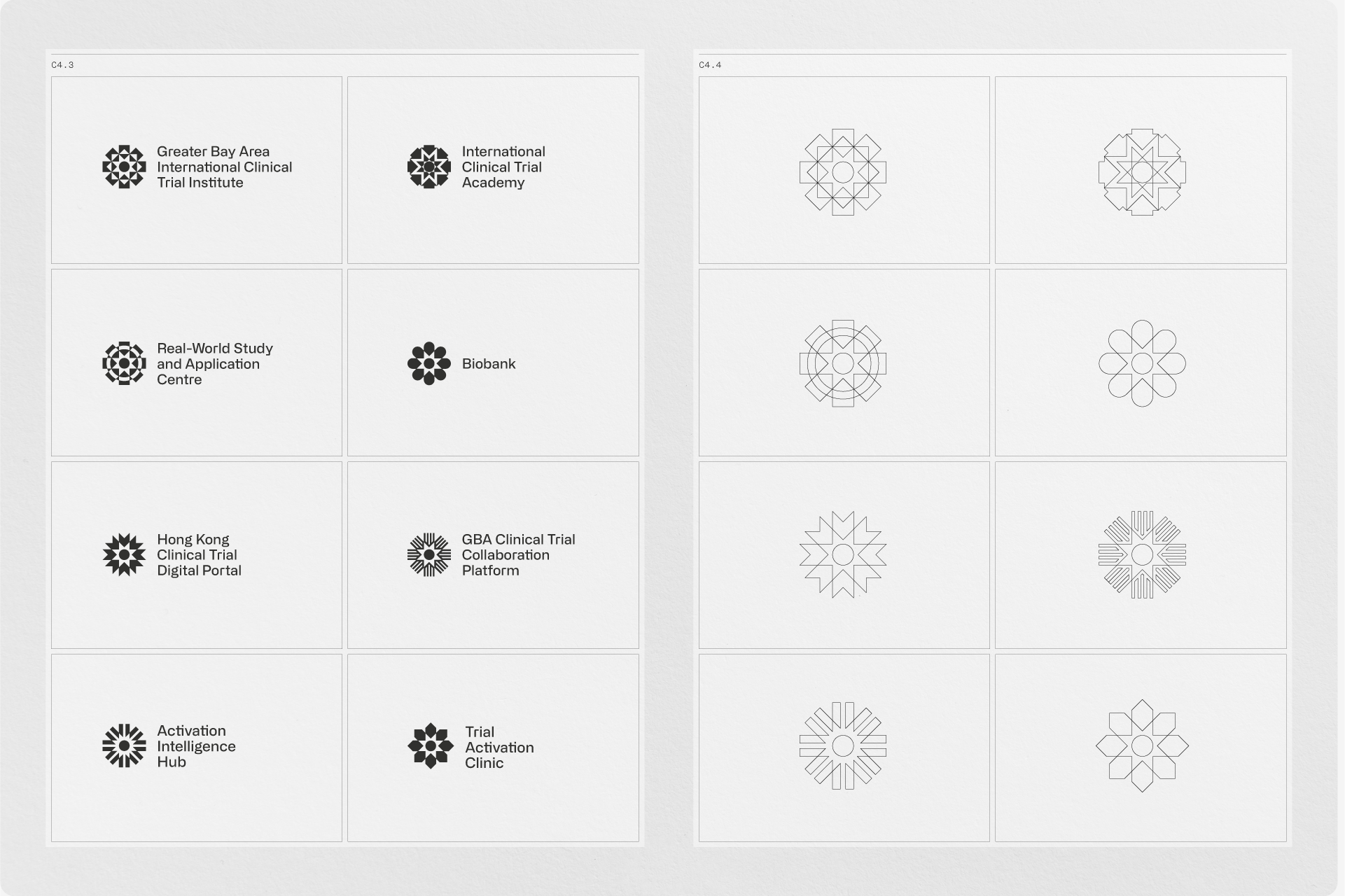
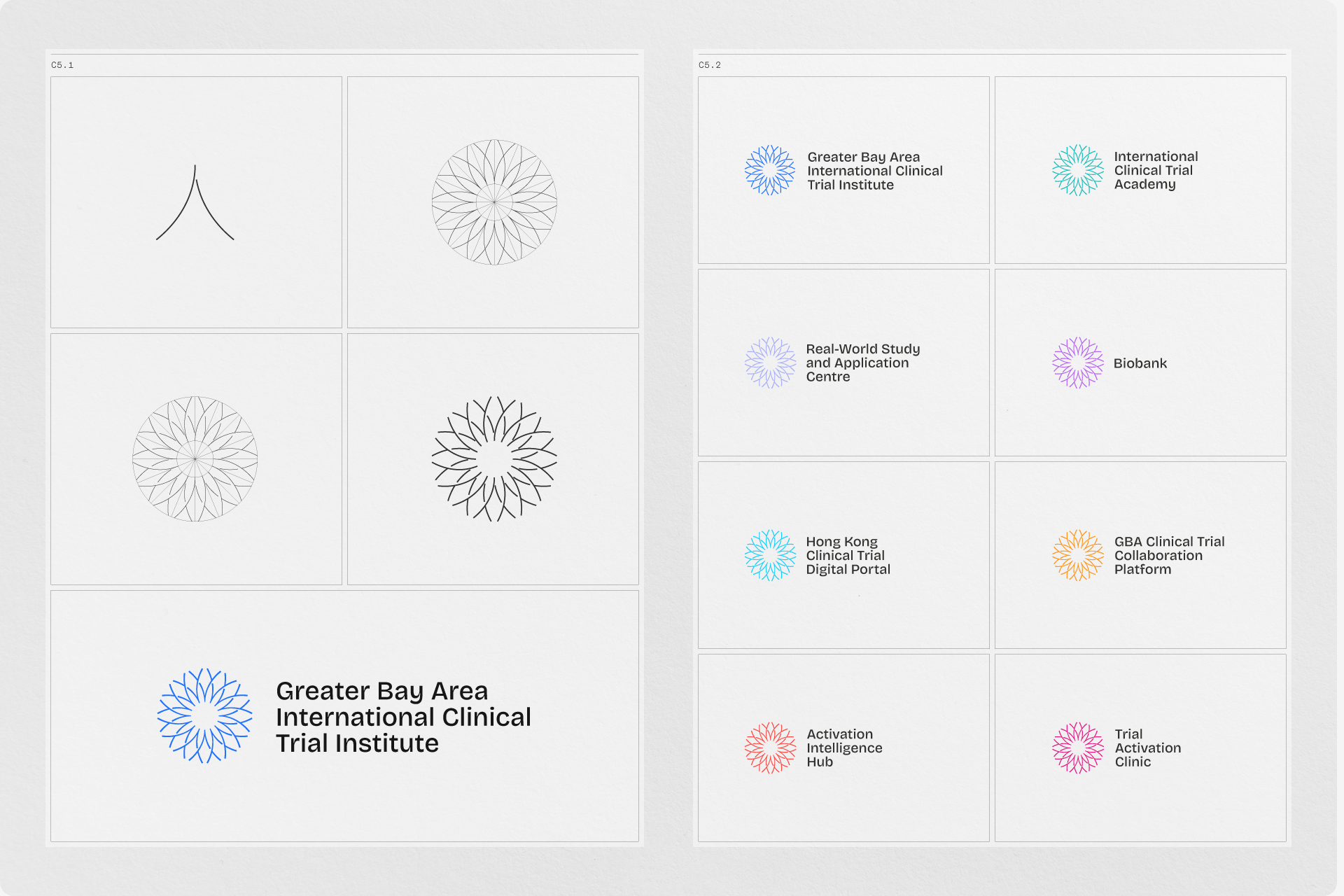
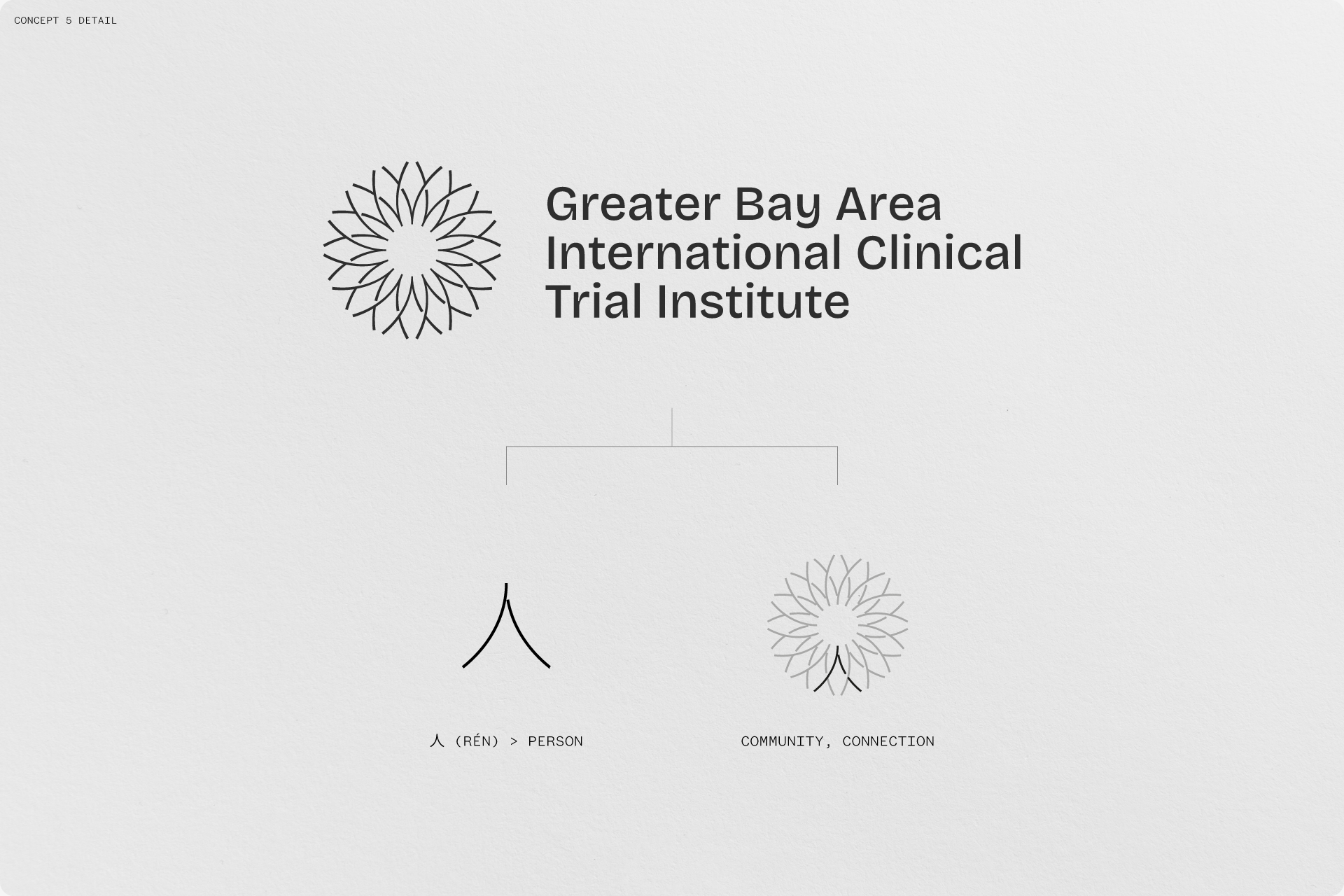
Eyes lit up when we got to concept five. Smiles and a collective sigh of relief! The idea that stuck was the one that put the human at the centre. The 人 character connected the institute to China, and the idea of a central point of dispersion, much like a dandelion, conveyed the idea of connection. It felt right. A balanced mark, based on a simple idea. The direction was set, anxieties released, and we closed with a strong, shared direction!
Over the next couple of weeks, we refined the concept, tasked with bringing the full acronym into the logomark while retaining the spirit and impact of the original concept. Once approved, it was submitted to the government for the final go-ahead.
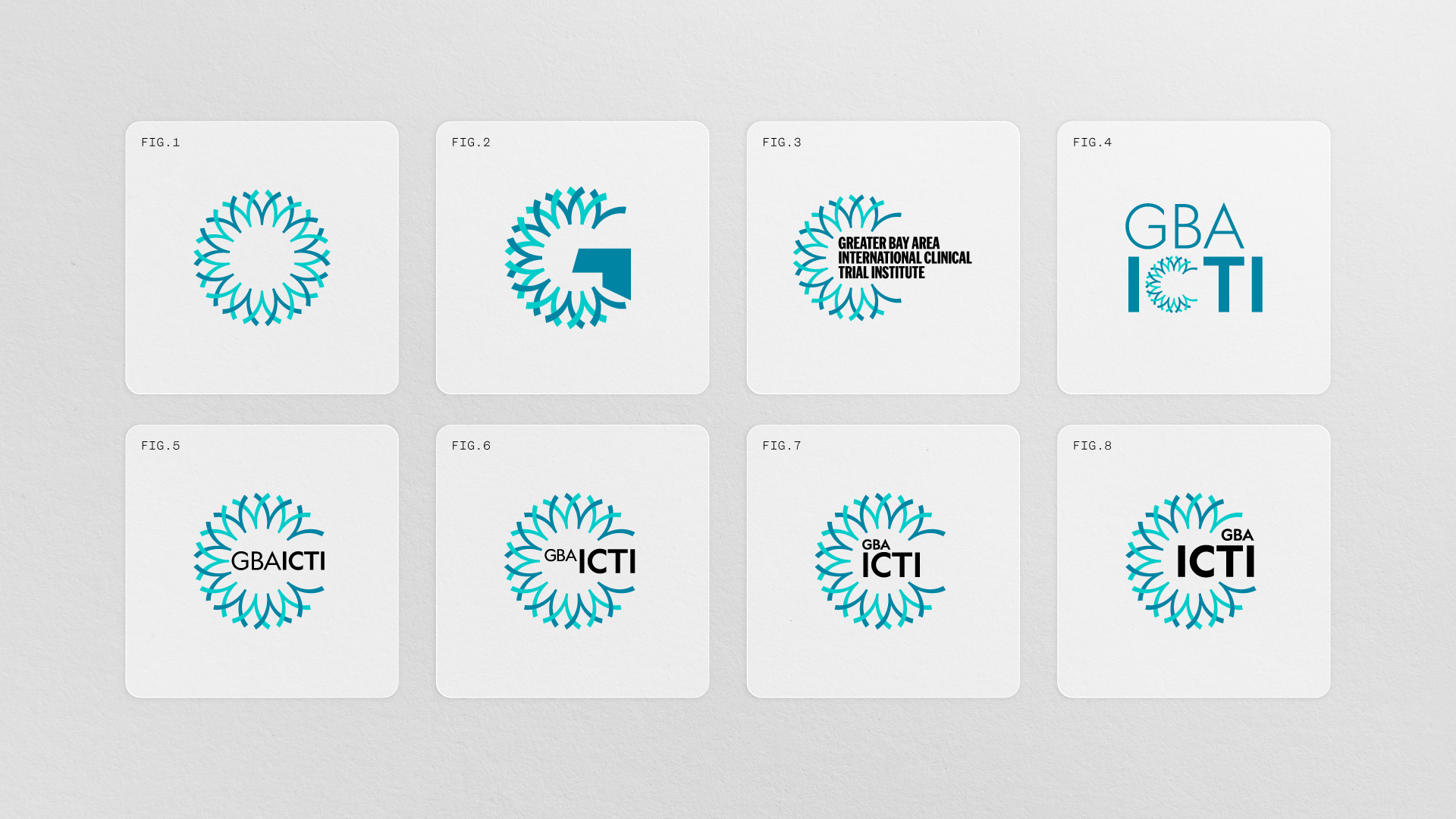
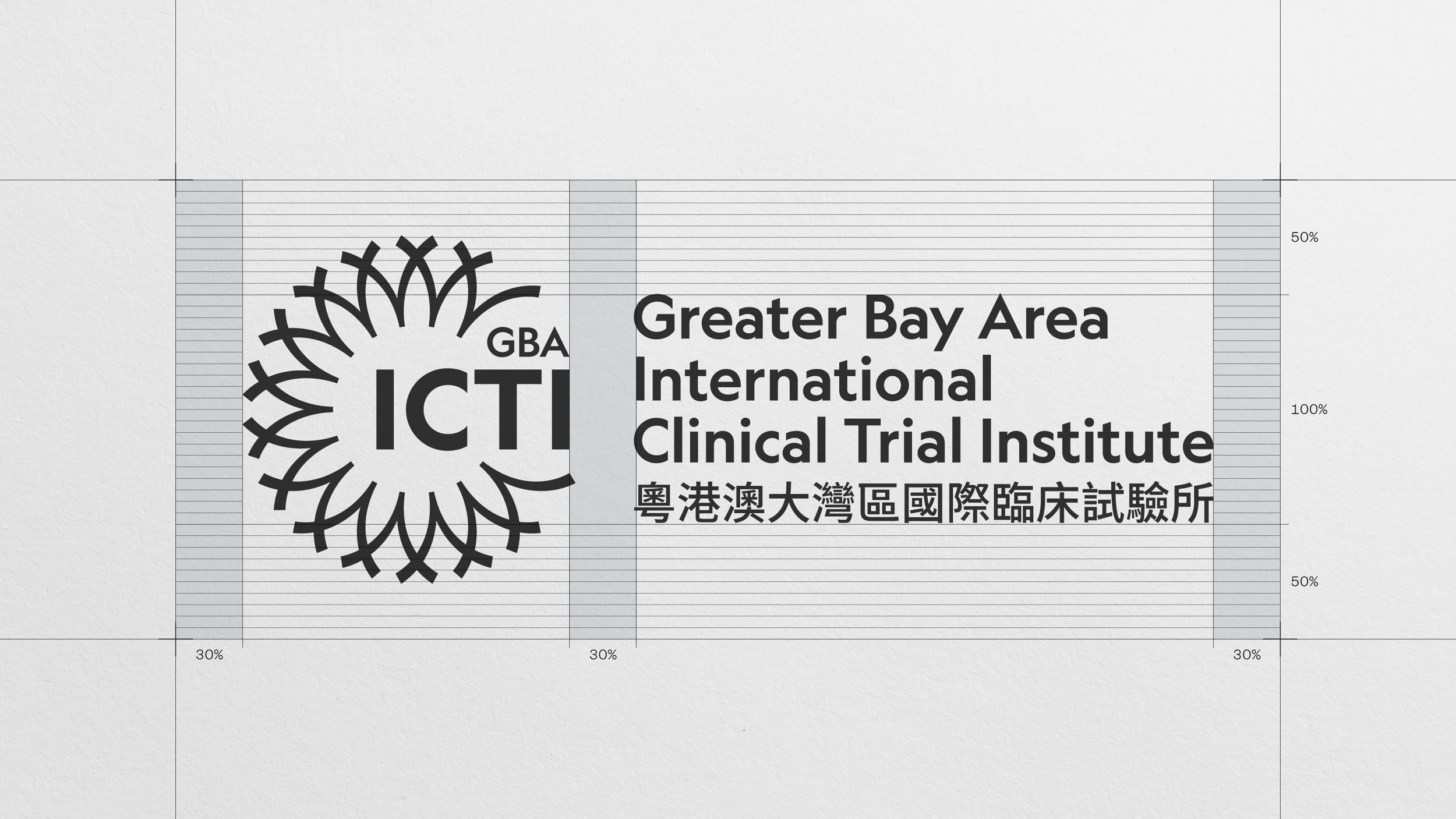
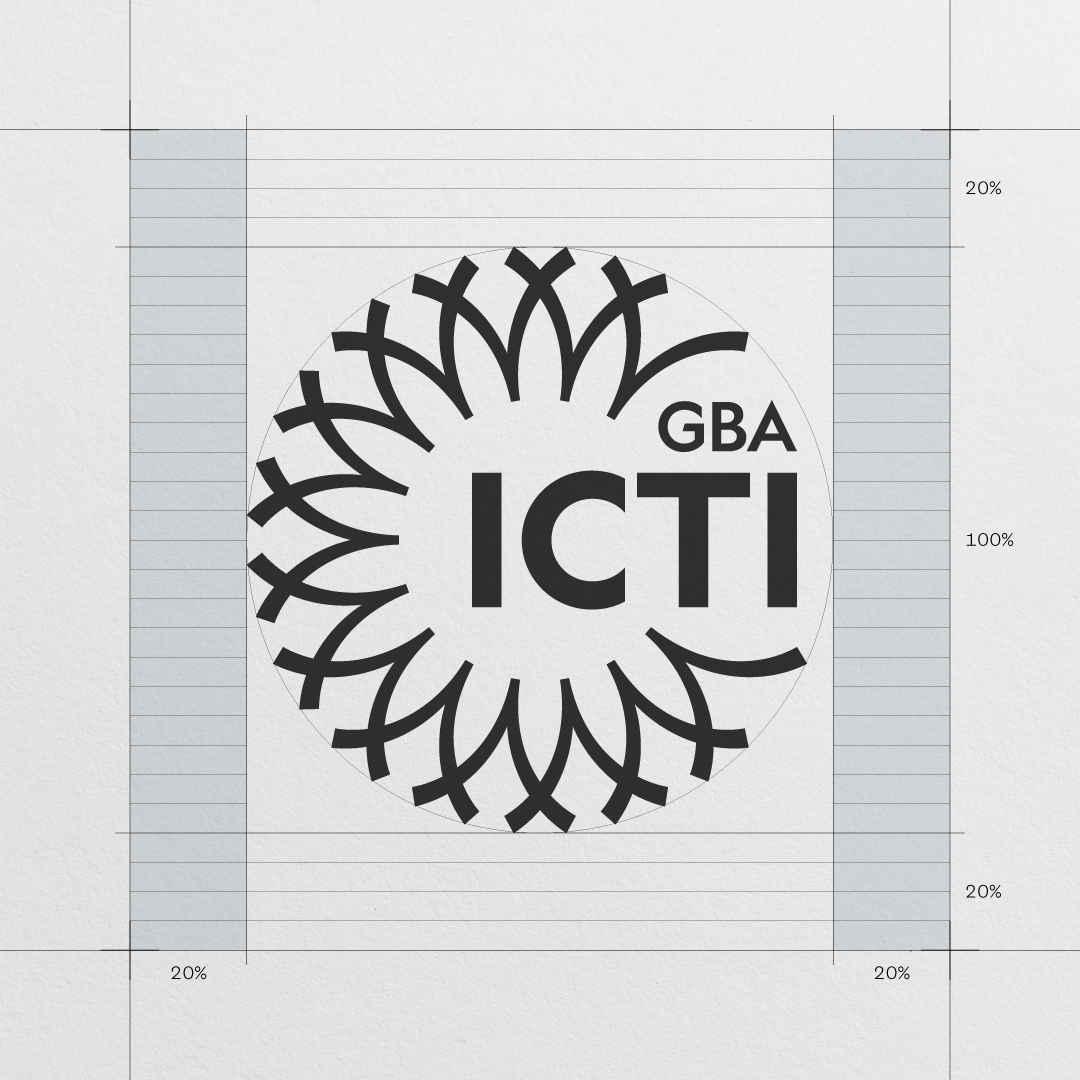
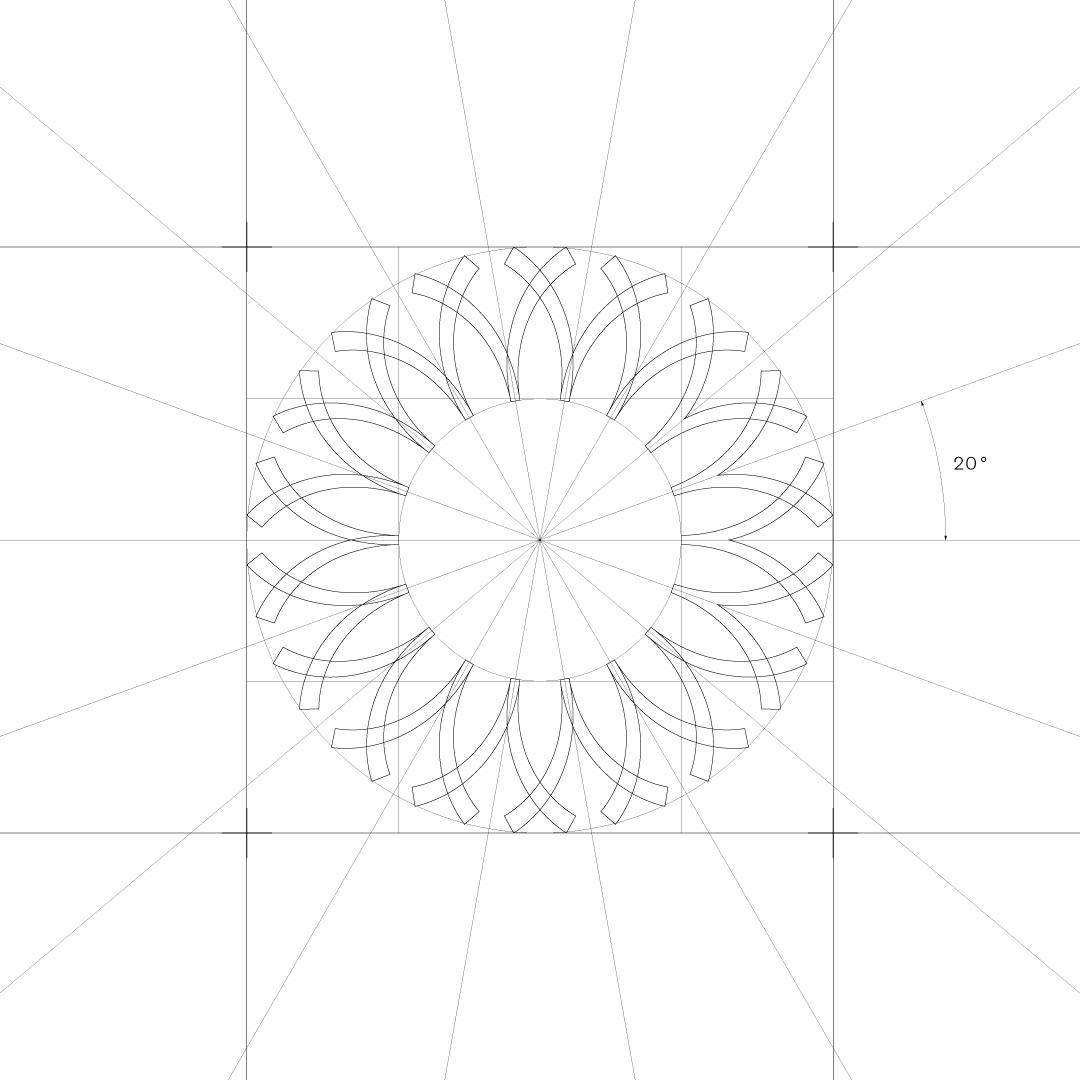
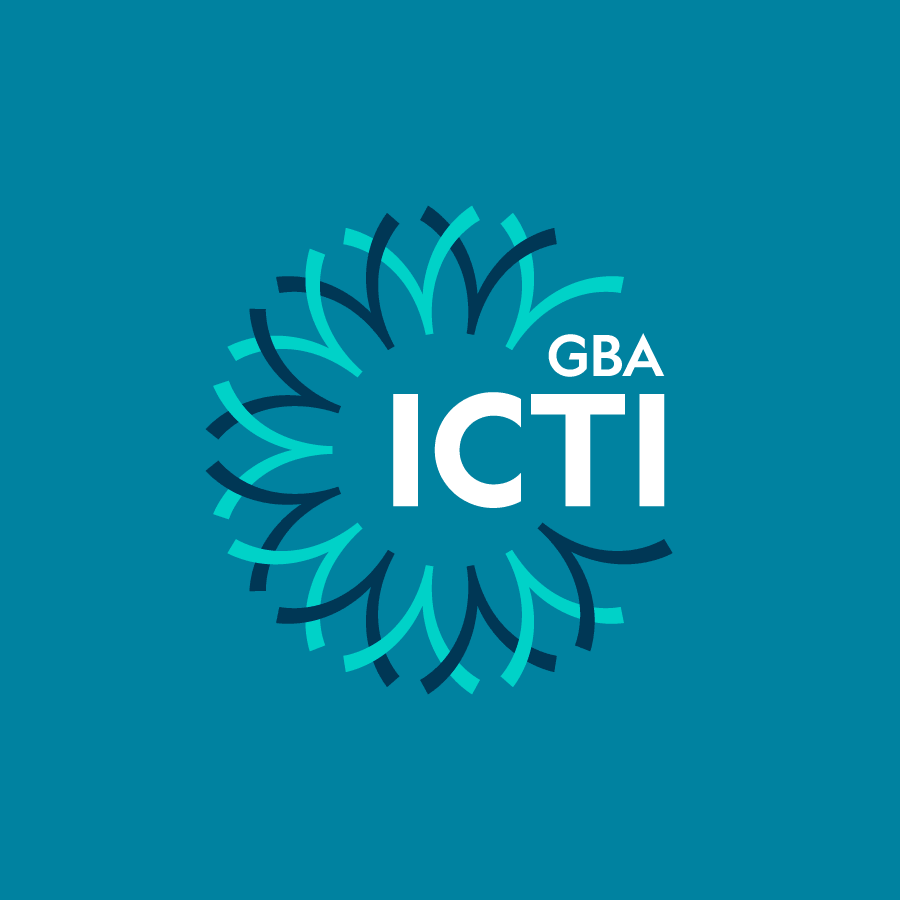
The final logo is based on the Chinese character 人, meaning ‘person’ or ‘human’. The logomark places people at the heart of our identity, reflecting the human-centric mission in clinical research. The individuals who participate in clinical trials, the communities they serve, and the professionals who advance medical discovery.
The clinical research industry consistently frames its work as something that happens to patients rather than for them. Participants are frequently invisible in the visual language of the institutions conducting research on their behalf.
GBAICTI is built on a human-centred philosophy, and 人 makes that clear from the very first mark.


The radial logo echoes a dandelion releasing its seeds: a point of origin from which ideas and discoveries are carried outward into the world.
It is an image that resonates naturally in the context of clinical research, the careful cultivation of knowledge, and its deliberate dispersal to the places where it can matter.


The circular network maps directly onto GBAICTI’s structure: GBA at the centre, connected to Guangdong, and outward to global research partners.
It symbolises GBAICTI’s role in building a cross-border ecosystem where collaboration, standards, and innovation flow freely.
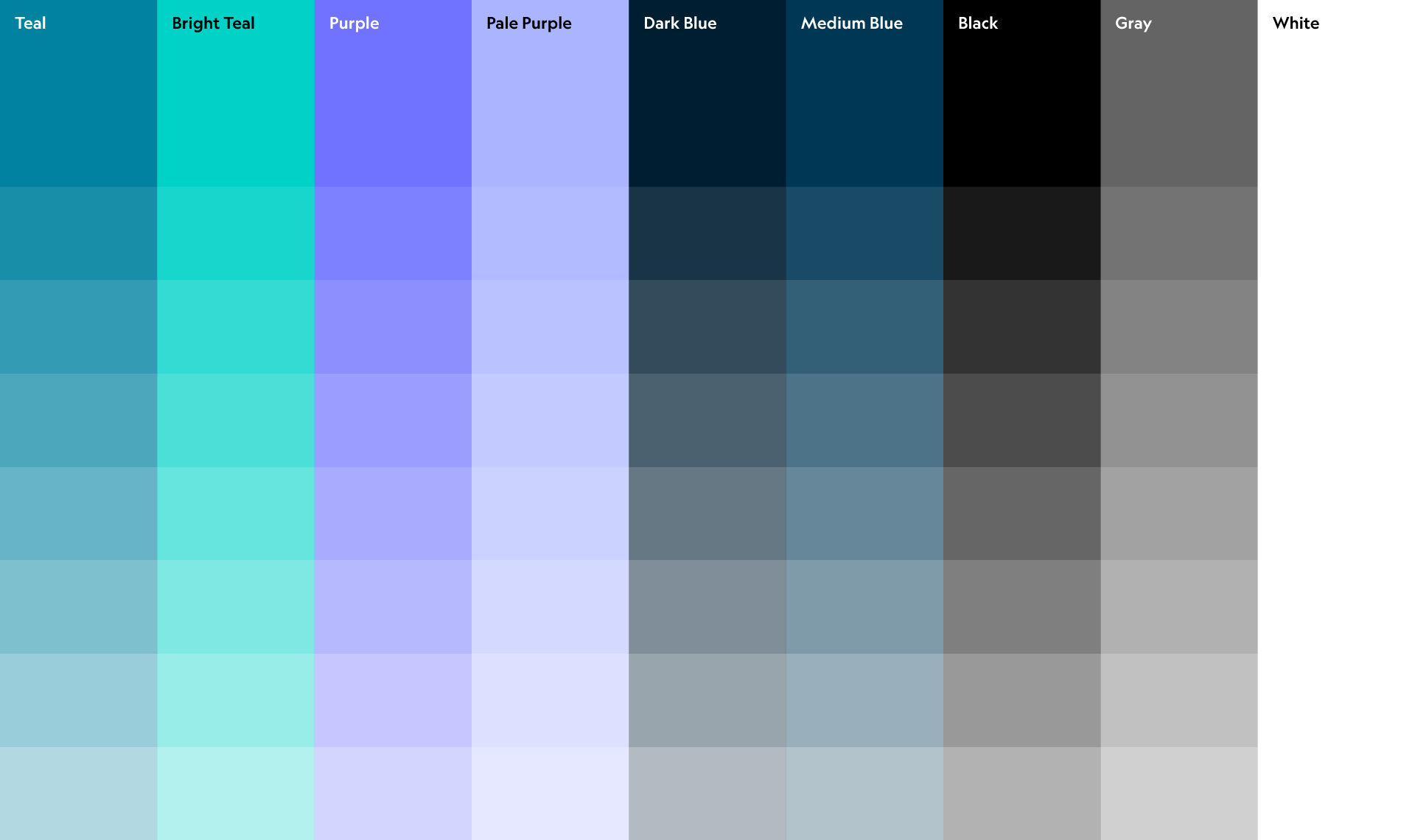
The colour palette was created to convey positivity and energy within the clinical context.
We used three weights of Geograph, a contemporary and geometric sans-serif typeface from Klim Foundry.
Geograph gives the brand identity system a confident, legible voice.

Expression
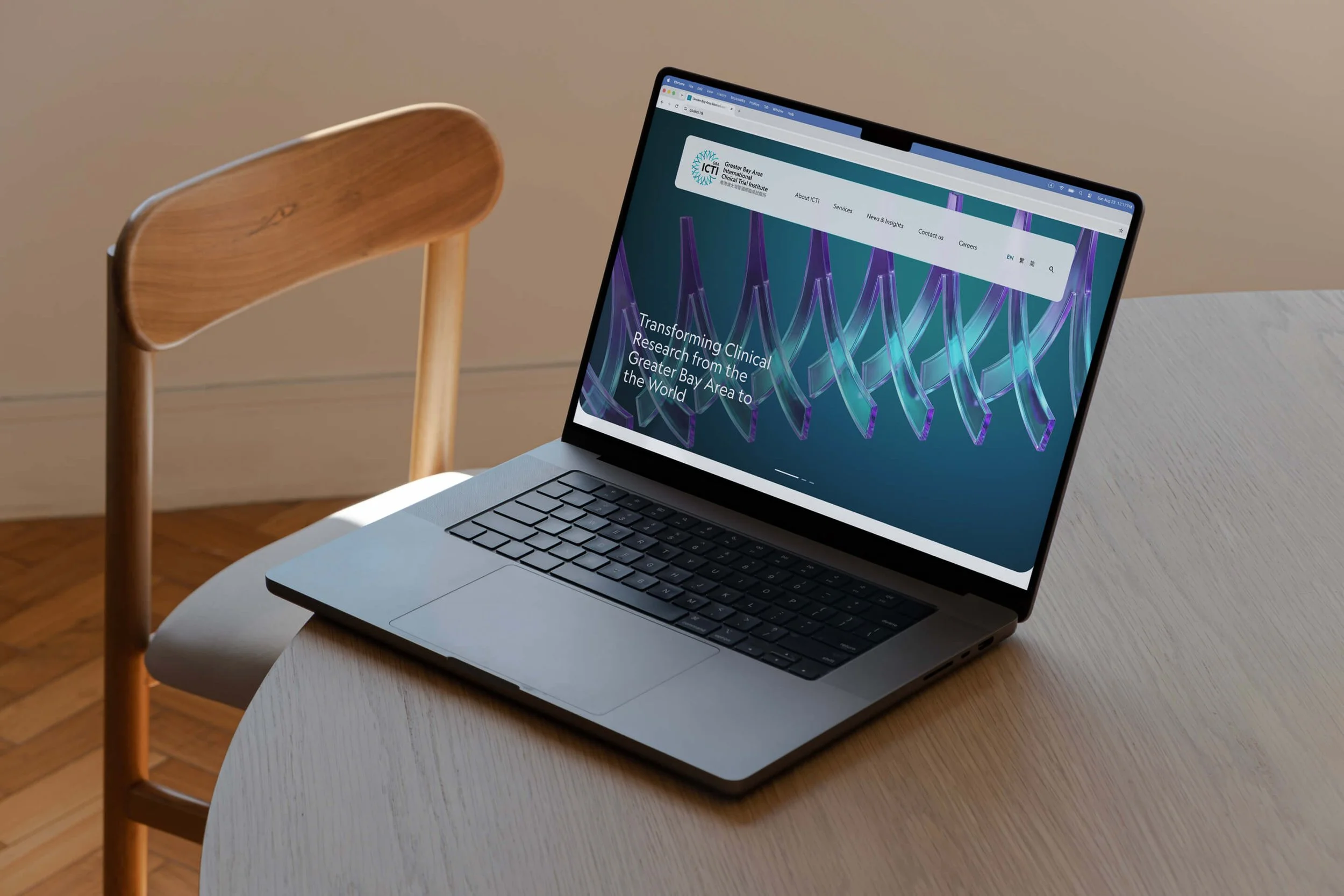
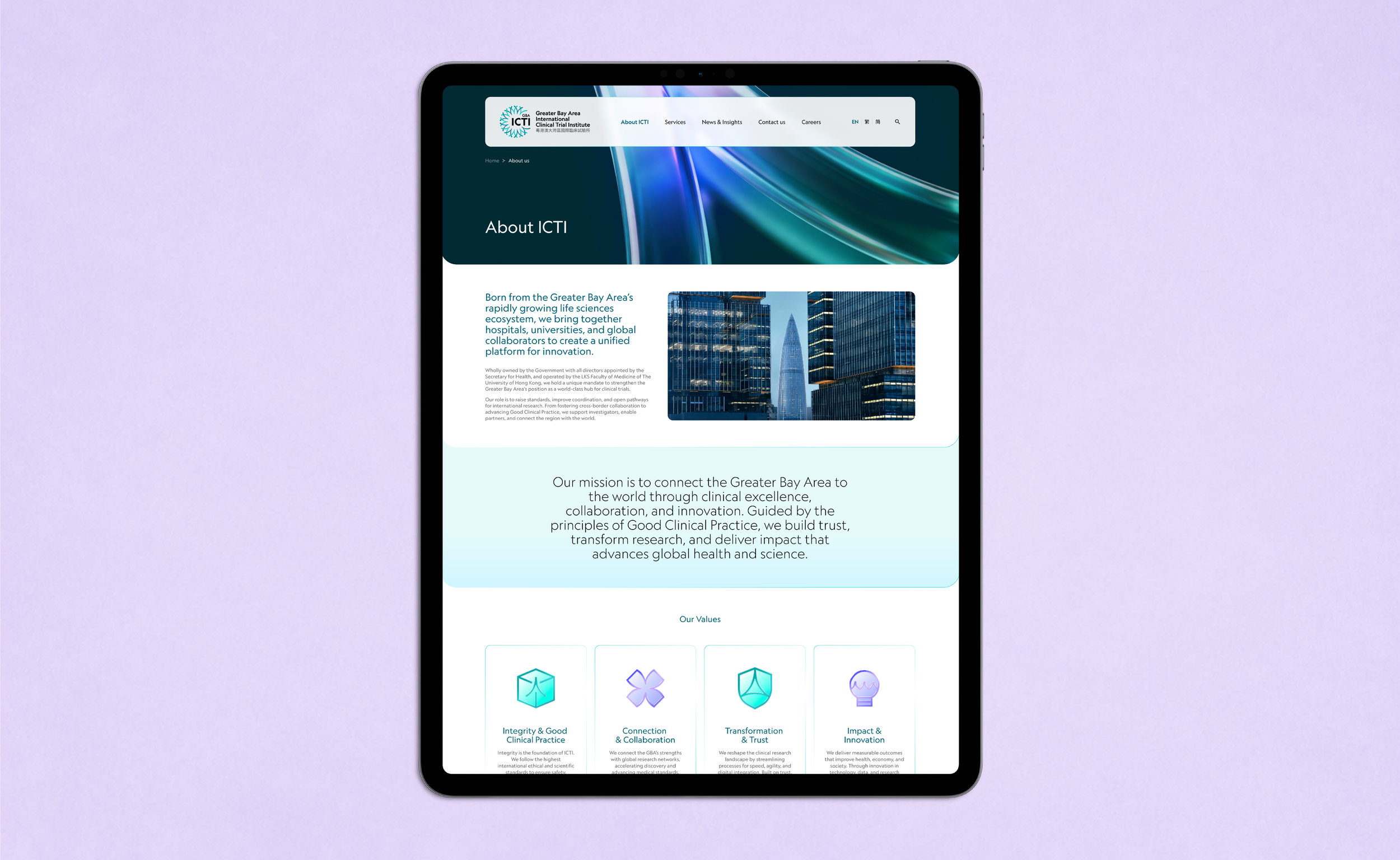
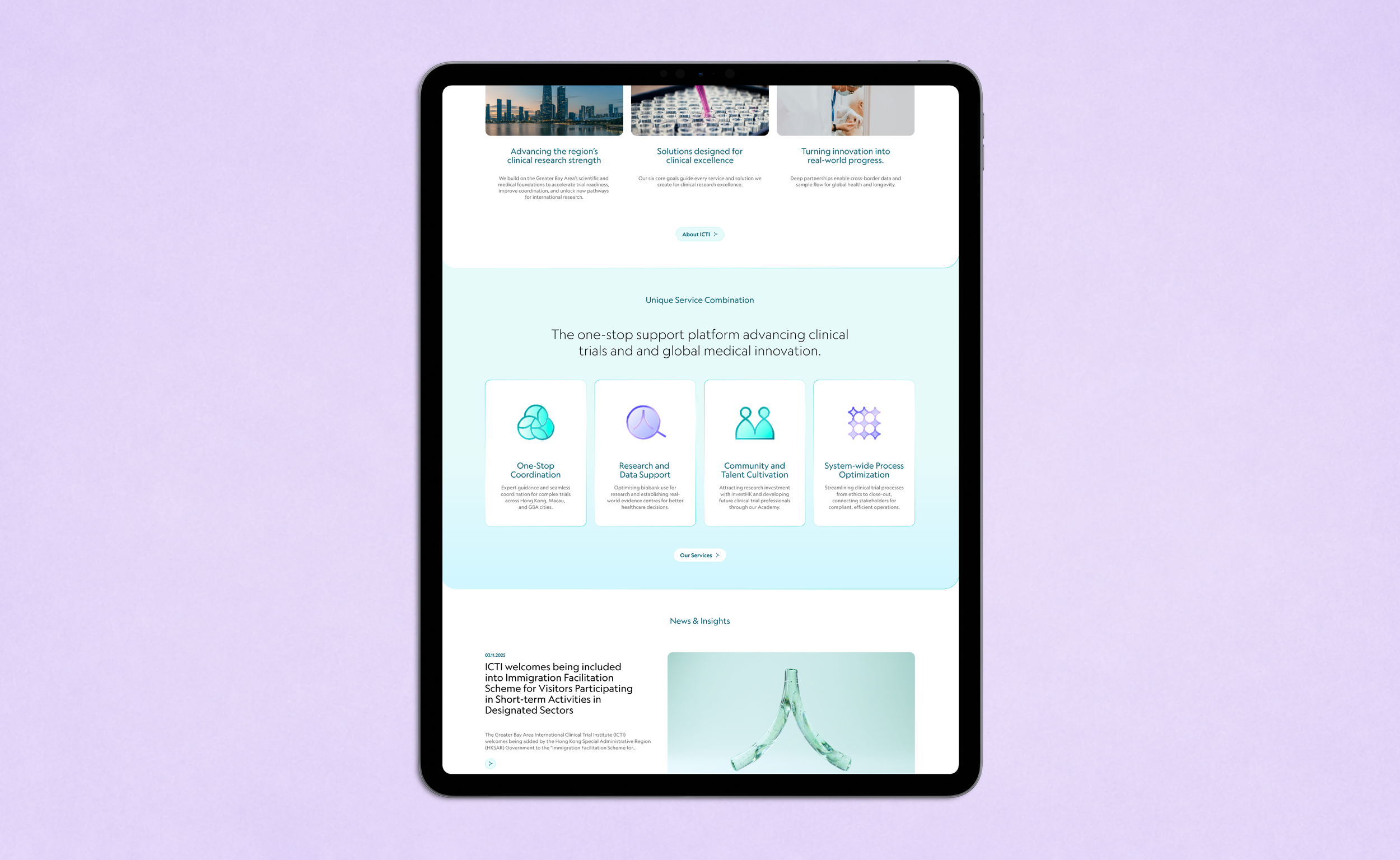
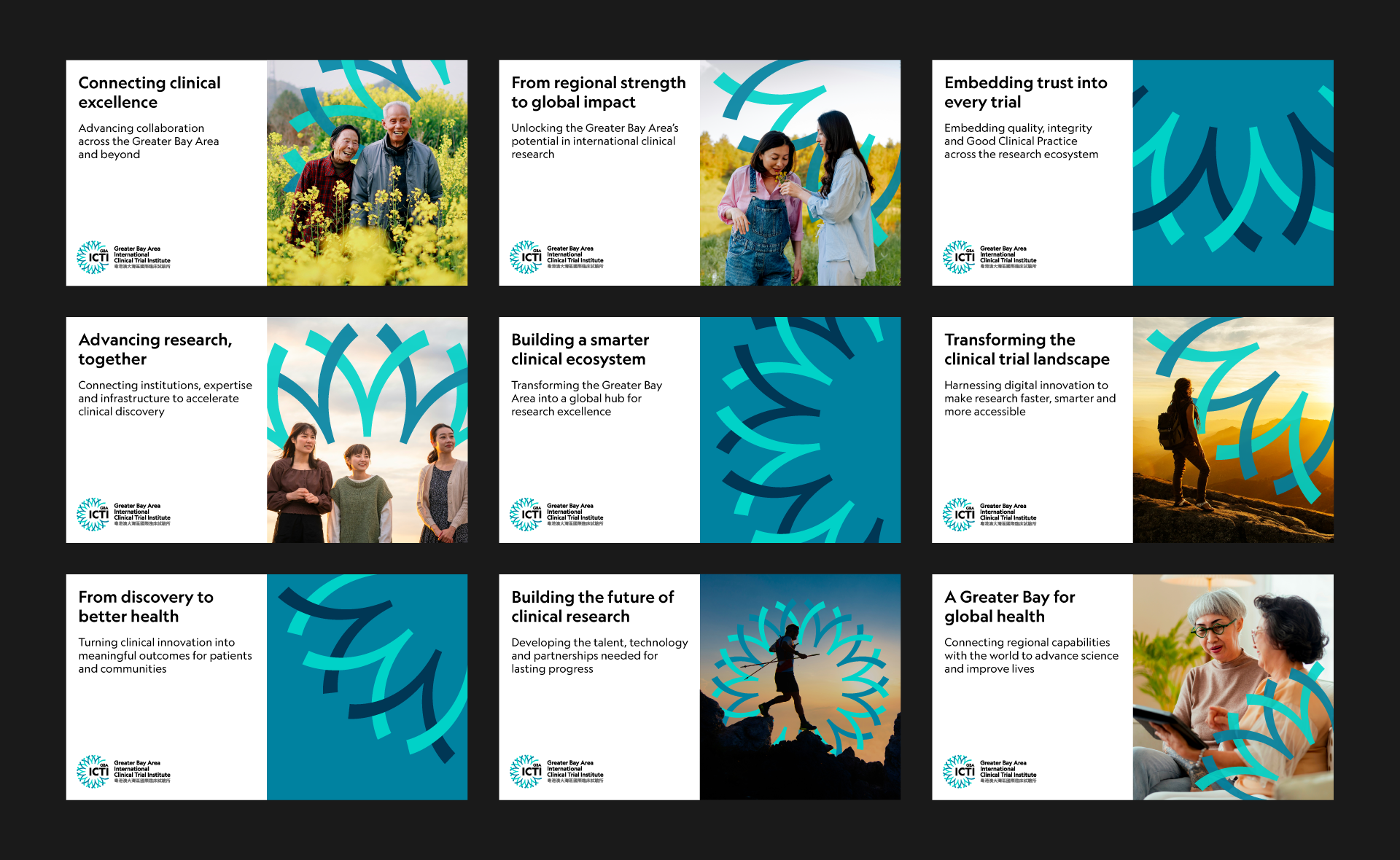
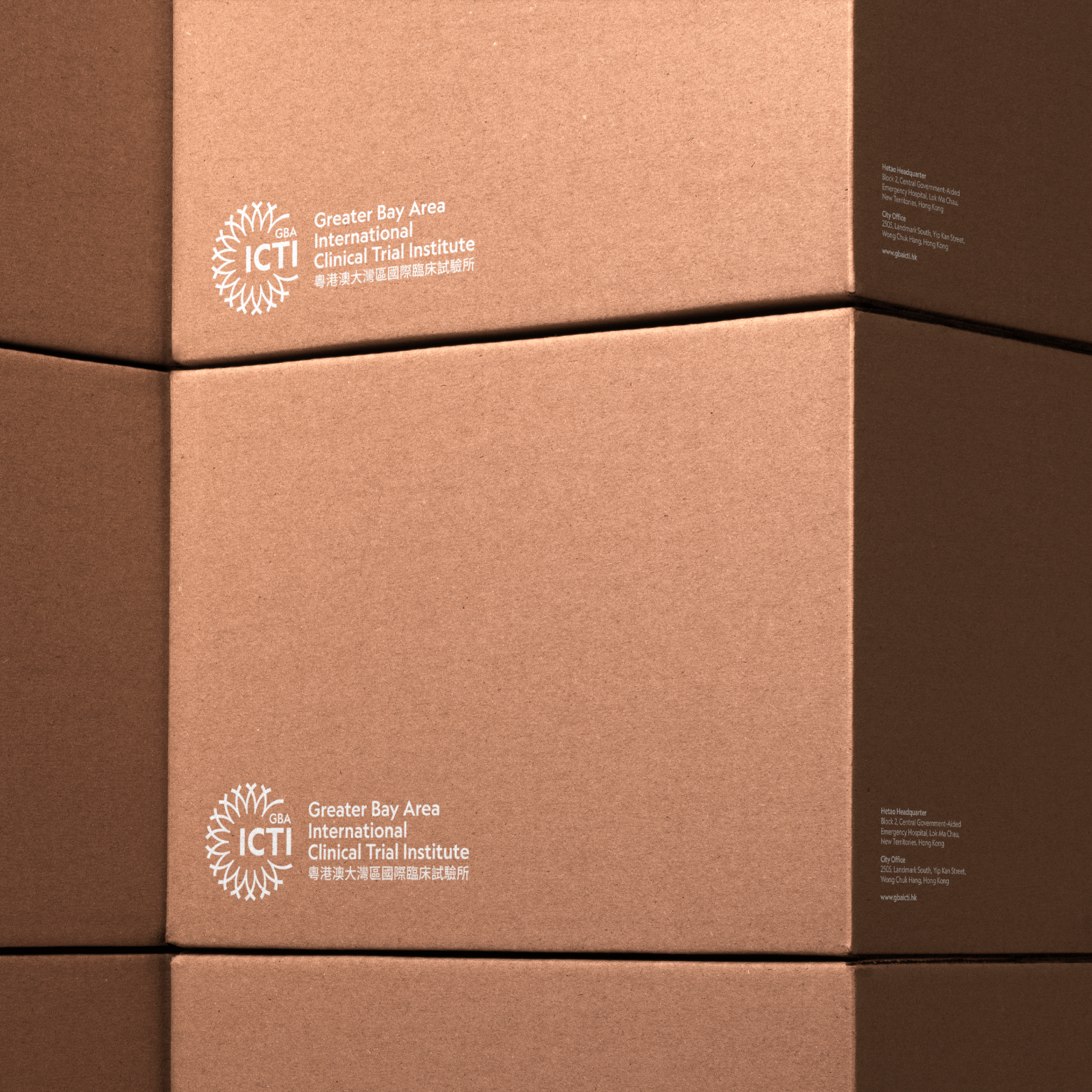
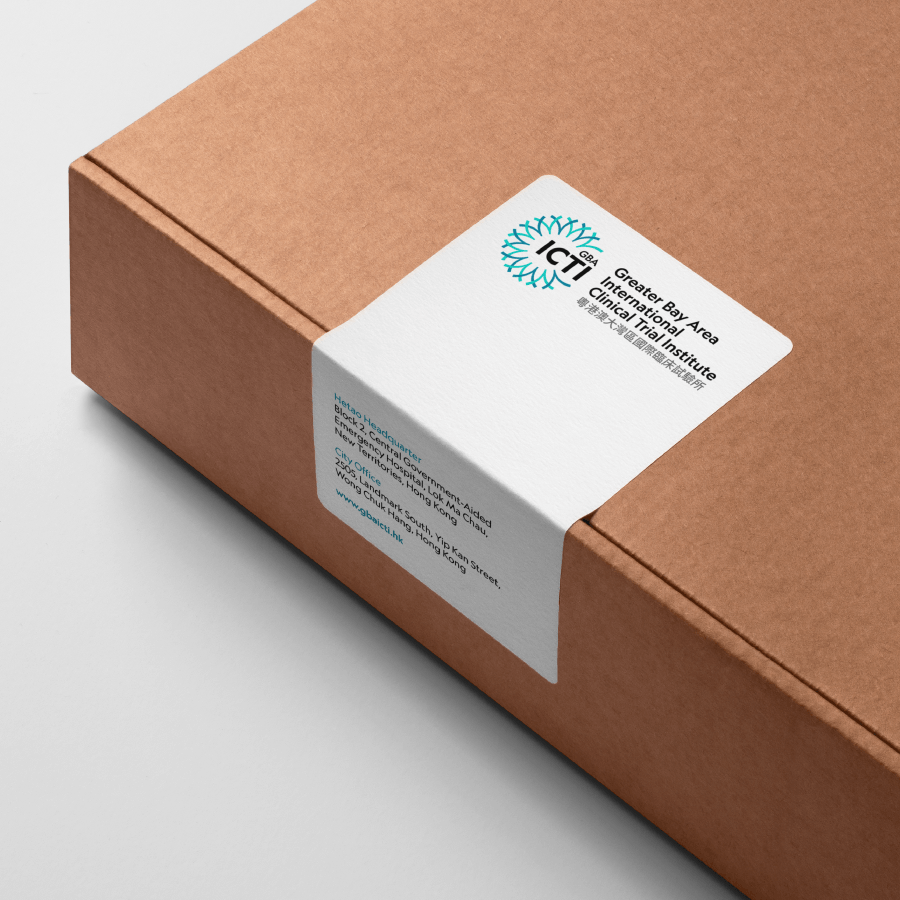
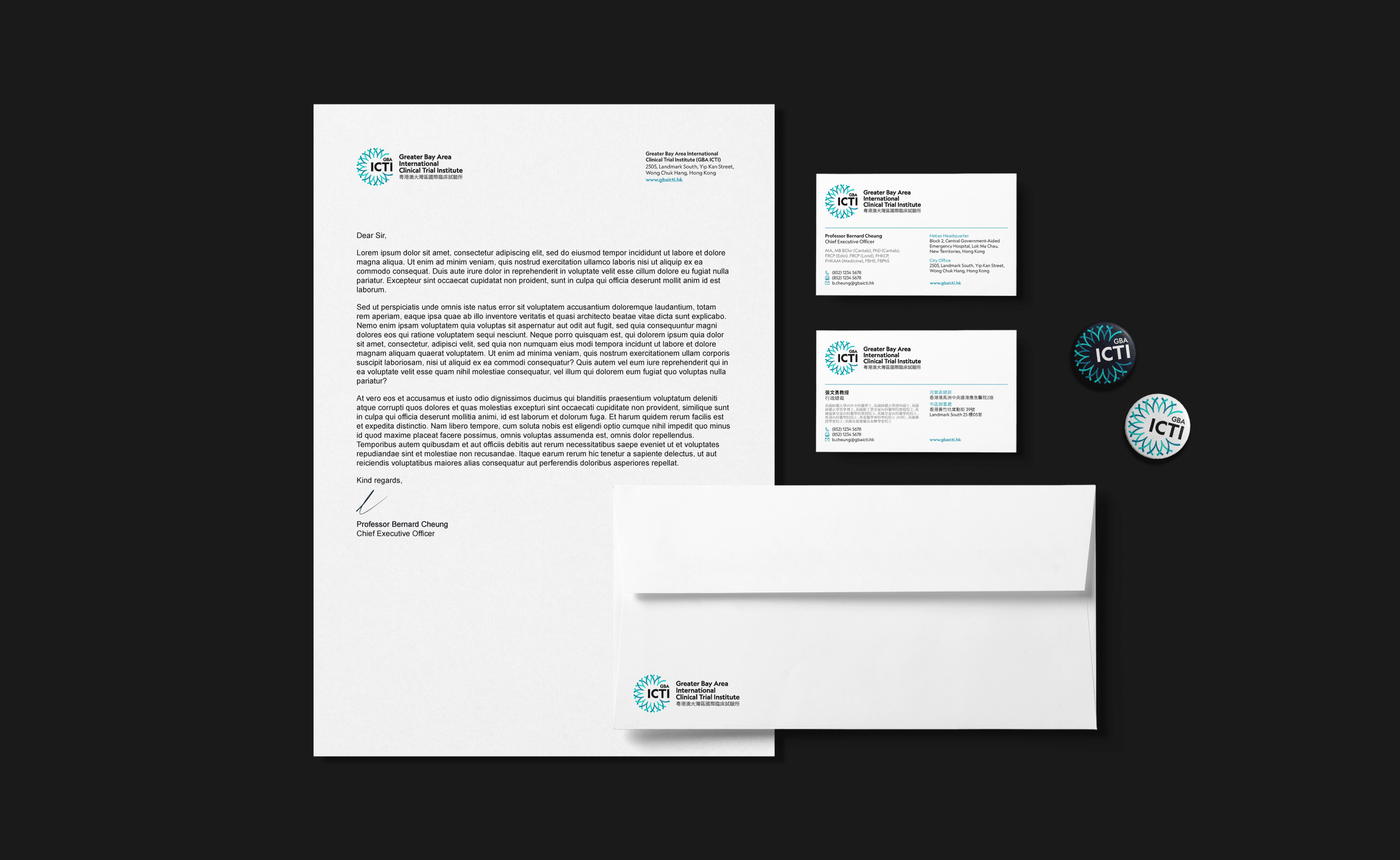
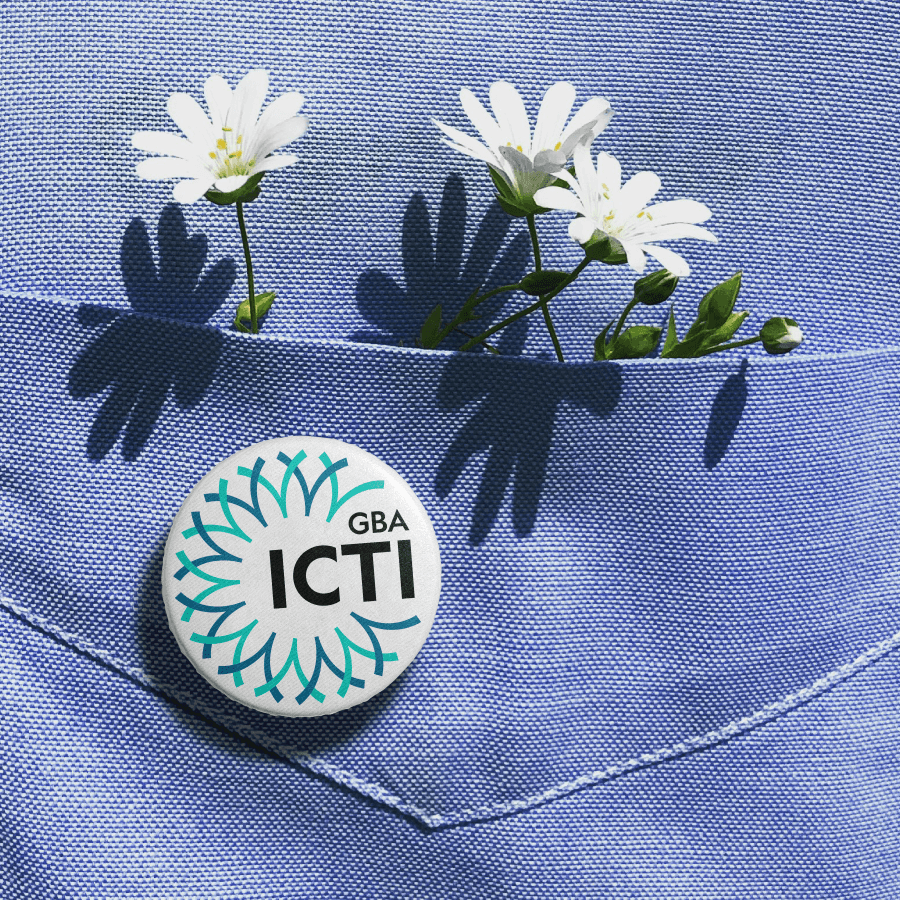
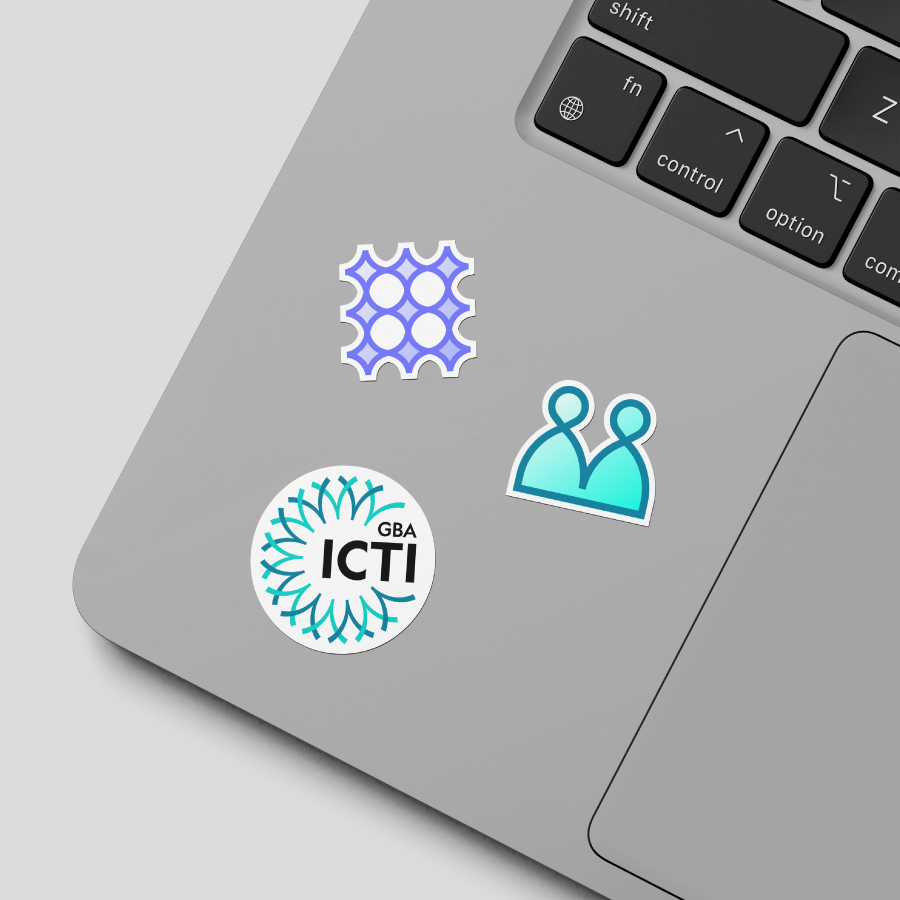
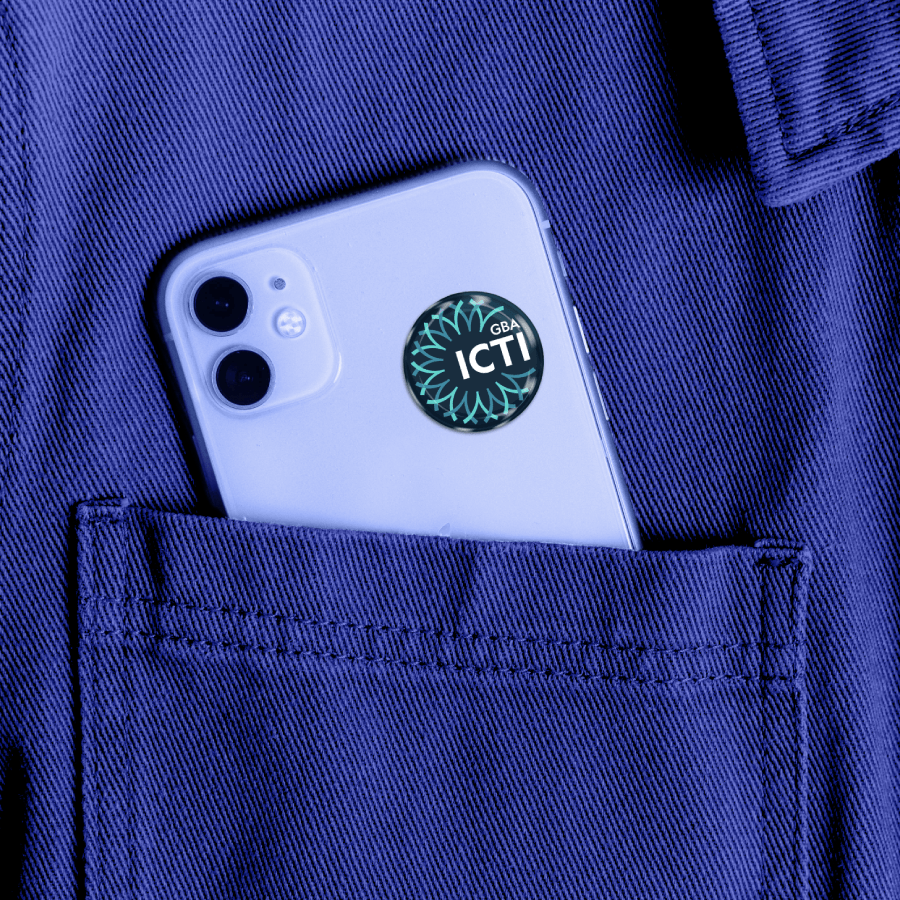
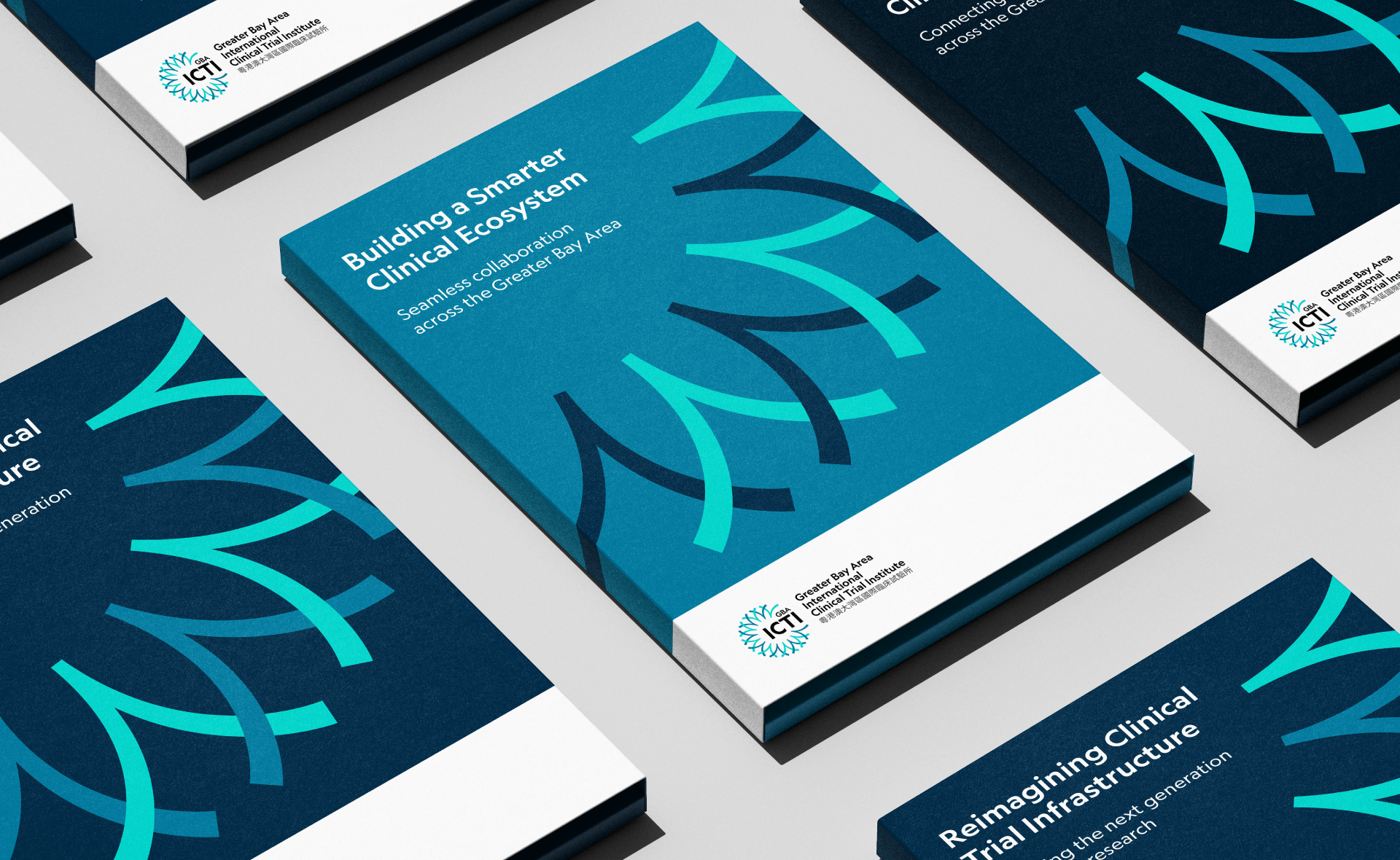
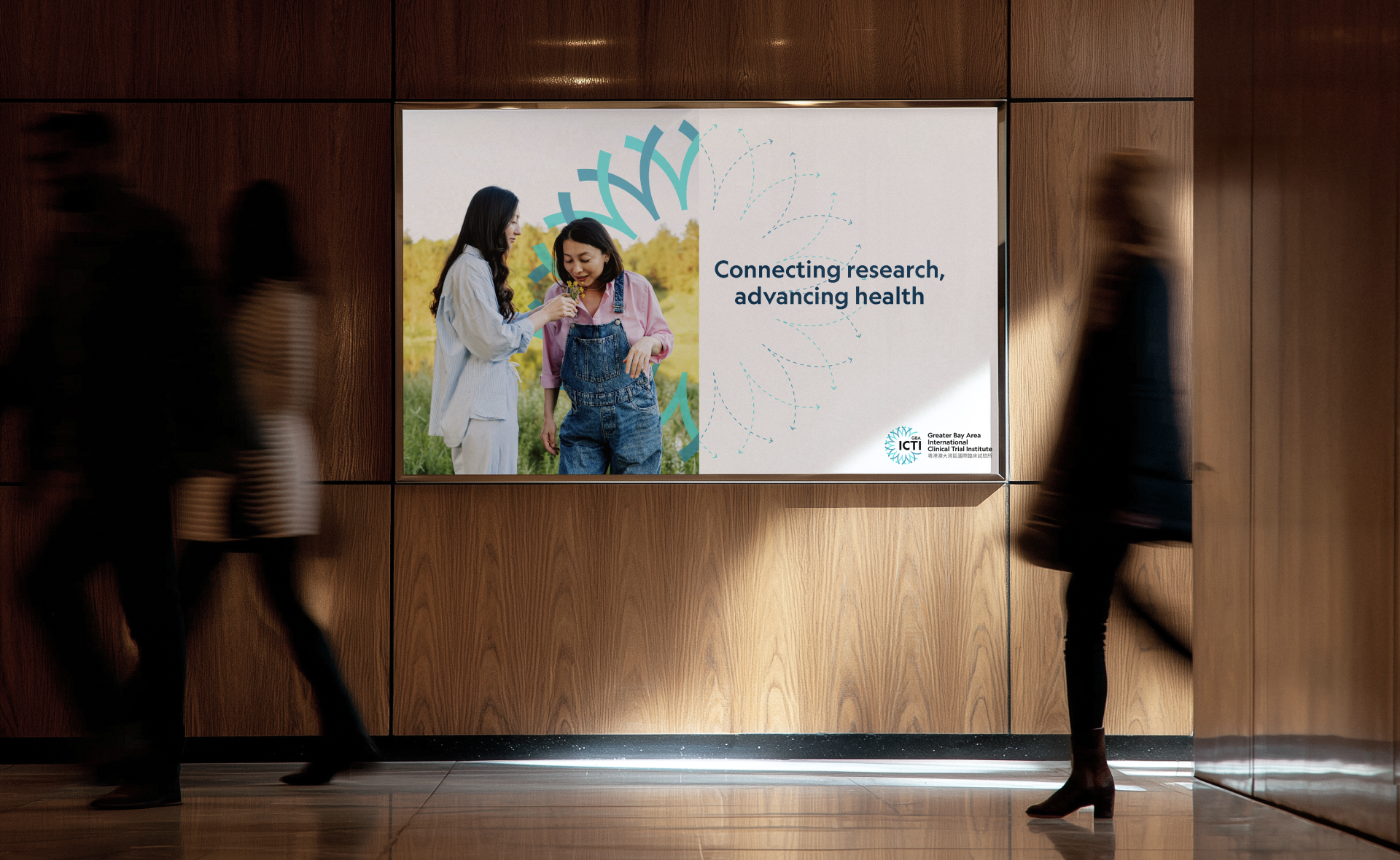
The modular logo extended naturally across all kinds of touchpoints as backgrounds, patterns, image treatments, and motion idents. This could be extended further and further, forever outward. Thank you, beautiful 人 !


Next project