Because it’s there
I am the kind of person to have obsessions. Since I first heard about it, I have been obsessed with George Mallory and Sandy Irvine’s attempt to summit Mount Everest. Were they the first to summit Everest?
Nearly a century later, the mystery remains unresolved. Perhaps that’s why the story refuses to disappear…
By Adam Charlton · 14 June 2026
Posted in Insight
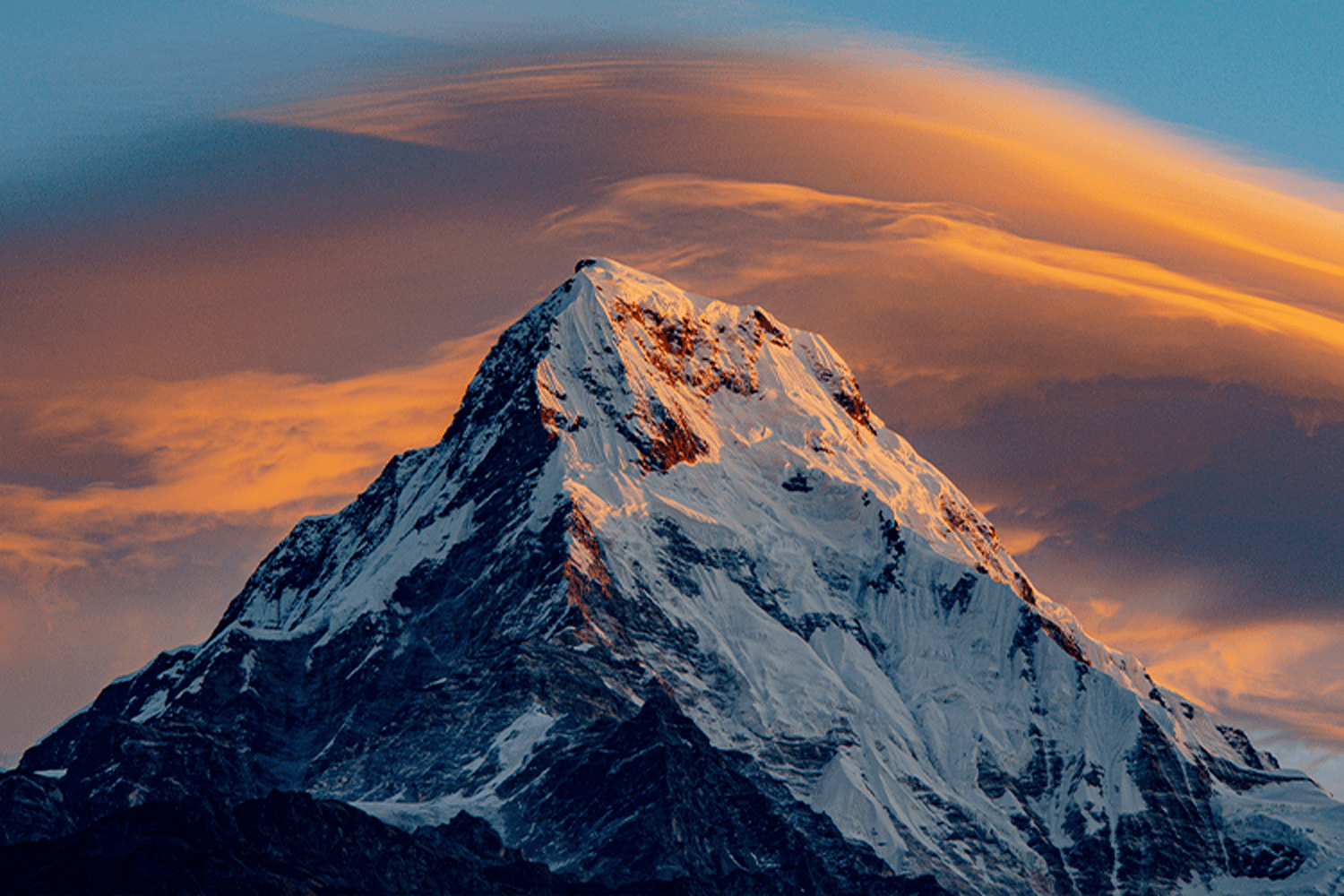
Photo via Unsplash+
I’m not a climber by any stretch of my imagination! A little bouldering over the years with friends taught me enough just to appreciate how difficult climbing really is. To lift your own body weight. To make progress. To keep moving upward while constantly managing the possibility of falling. (And we’re talking a 3m height onto a soft crash mat!)
I’ve been lucky enough to ski a handful of times growing up. Mostly in the Alps. Standing under the North Face of the Eiger, staring up at this impossible monolith, while being introduced to stories about the earliest failed summits.
I’ve always been fascinated by people who willingly walk towards uncertainty.
Great stories live in tension
Tensions exist in the centre of the human condition. Since cavemen, we’ve existed between curiosity and comfort, uncertainty and certainty.
Every human has a desire to explore, to leave the cave, to find food, resources, new pastures, and opportunities. At the same time, we want safety, certainty and belonging.
When we’re young, our desire for the new outweighs our desire for stability. For some, this is as small as going on holiday, for others it’s going to the moon.
Mallory Road
We live now between Hong Kong and Brighton in the UK. When we lived in Hong Kong (2012-24), I used to love walking at night. Often it was the coolest, less humid part of the day, more amicable to longer thinking walks. I’d walk from our home in Prince Edward, through Kowloon Tong, up towards the mountains. Short walks, long walks. Walking in Hong Kong is a great way of grounding, digesting, and thinking through work. It’s a great way of seeing things from new angles, outside of oneself.
Long walks in Hong Kong is how I got to know my wife, through covid, we’d walk and walk.
I still love the simple act of walking, trying to be in tune with the thoughts it unlocks. Last year on one of my wonders in the UK, I wondered to a quiet residential road called Mallory Road. A short, two-block road, in the middle of Hove, with large but not grand houses, just off of the much grander Tongdean Avenue.
On seeing the signpost, ‘Mallory Road’, I smirked back at a time in Hong Kong, on one of my longer walks, listening to the audiobook ‘Fallen’. The book recalls the first journeys to the fateful attempt, the backgrounds of Mallory and Irvine, Mallory’s home life in Godalming (where my father used to work, as quaint as English towns get!), and everything that lead him to the expeditions including surviving fighting in WW1, failed previous attempts on Everest, and everything and everyone he left behind.
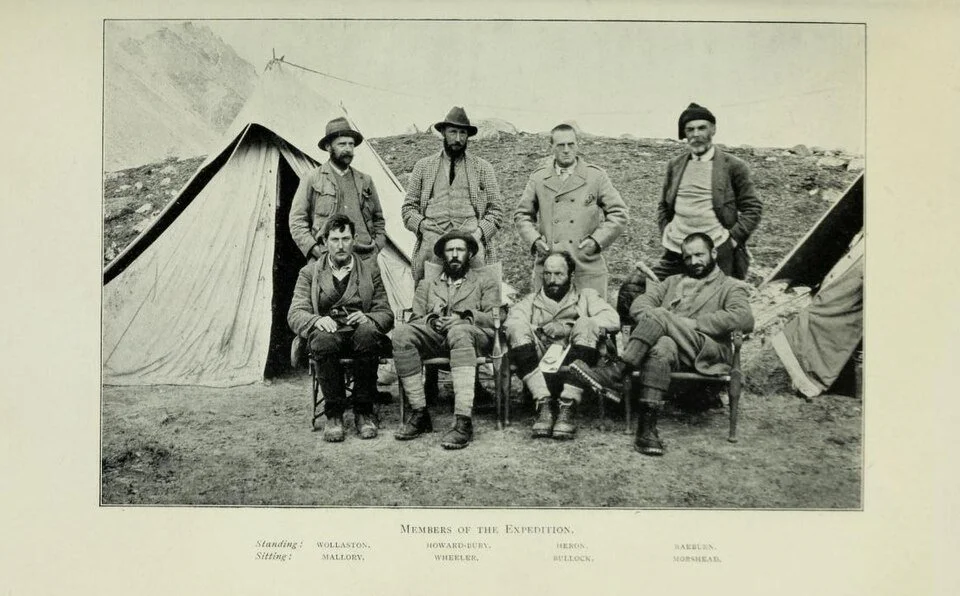
Members of the 1921 British Mount Everest Reconnaissance Expedition at Advanced Base Camp. Photograph by Alexander Frederick Richmond “Sandy” Wollaston, 1921. Public domain via Wikimedia Commons.
“Because it’s there”
Possibly the most overquoted quote about mountaineering and exploration! When asked just why he was attempting to summit Everest, his response was curt and simple. “Because it’s there.”
It’s an opportunity in front of us, it’s the nails we see as hammers. To be the first to summit Everest would have given Mallory fame, fortune and financial security for his young family. This is his personal tension; to gain stability for himself and his family, he chose to attempt one of the most dangerous things he could.
Generations of ‘unprecedented change’
Every generation believes it is living through unprecedented change. New technologies. New platforms. New industries. New ways of working.
Yet the stories that continue to resonate are the emotive ones that centre on the human condition.
Brand design exists in tension
The process of designing brands sits within tensions. Every client wants something new, but not too new. Different, but familiar.
Logos must be distinctive, but remain recognisable.
Brands must be dynamic to help the organisation evolve and build meaning, yet consistent so the audience can easily relate to it.
The best logos often live in this space. A successful identity introduces enough novelty to be memorable, while remaining familiar enough to feel trustworthy. Too much of either and the balance collapses.
Rolex and Everest
The story of Rolex is inseparable from Everest. The Explorer was created to commemorate the first successful ascent of the mountain in 1953 by Sir Edmund Hillary and Tenzing Norgay.
Rolex gifted the expedition Rolex Oyster Perpetuals, the peak of wristwatch technology at the time. (Even though Tenzing Norgay was wearing a Rolex, and Sir Edmund Hillary was wearing a Smiths).
It’s one of the great examples of brand storytelling because it transformed a tool into a symbol.
Rolex’s brand equity today was built, in part, by this continued association with exploration, one of the most emotive parts of the human condition.
Rolex commemorated the expedition with the Rolex Explorer, with every one of their watches maintaining the Oyster case and Perpetual automatic movement.
Interestingly, the story of Mallory and Irvine is just as strong, with the underdogs climbing nearly 30 years before the first successful summit. Simply because the tension and question remain: Did they submit? The story remains unresolved. Whereas we know Hillary and Norgay did. It is resolved, the book is closed and on the shelf.
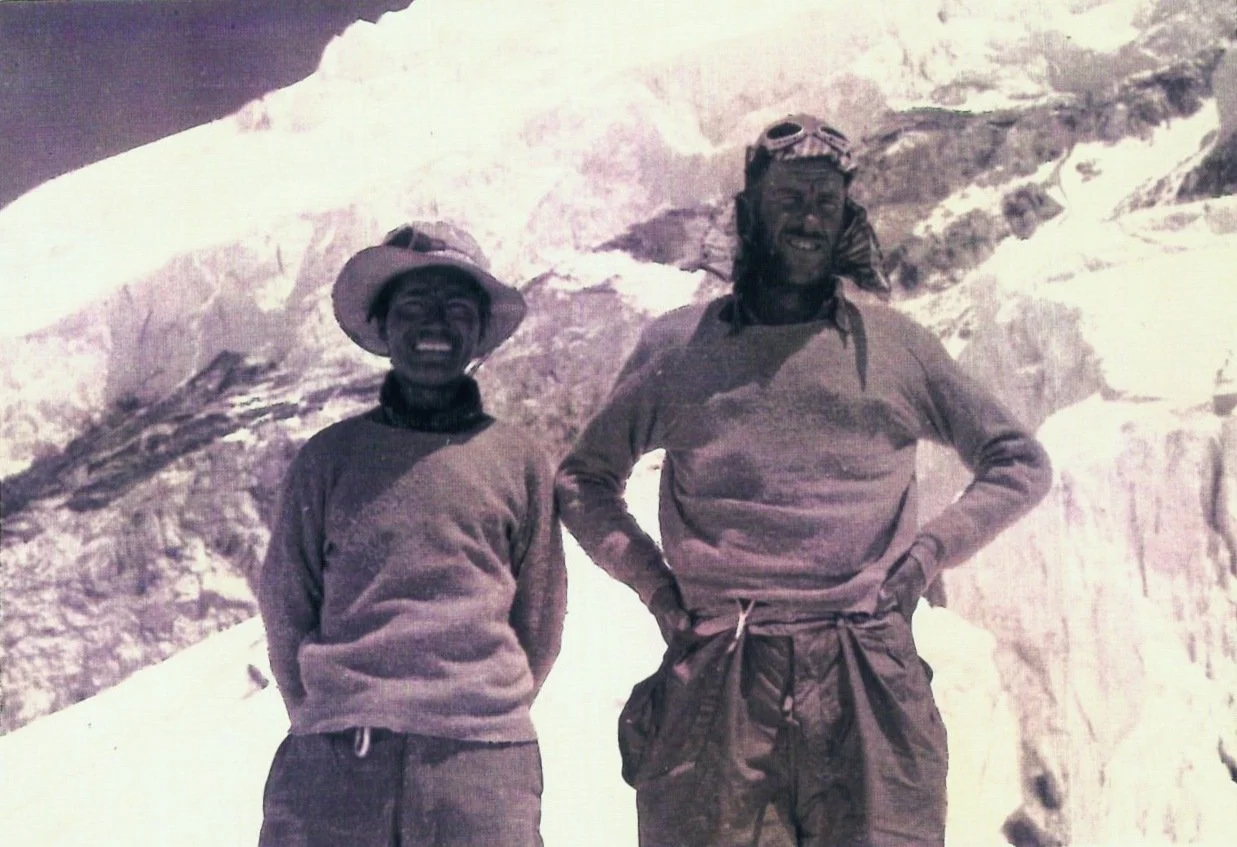
Tenzing Norgay and Sir Edmund Hillary during the 1953 Everest expedition. John Henderson Collection, via Wikimedia Commons (CC BY-SA 3.0).
Watches, tools and MacGuffins
Watches used to be tools. For centuries, their purpose was simple: to tell the time. Sailors used them to navigate. Pilots used them to calculate fuel and distance. Workers used them to organise their days. Timekeeping was a genuine problem, and watches were one of humanity’s most elegant solutions.
I love watches. I love the intricacy, the tradition, the craft, the focus, the aesthetic.
Watches are a physical metaphor for the form-versus-function tension in the design process. Watches combine typography, whitespace, geometry, proportions, history, and iterative design process. Watches can be worn for decades, broken, repaired and handed to the next generation. Every scratch, mark and dent shows wear, life, and companionship.
The invention of watches and clocks represents the human desire to understand the world around us.
Today, time is everywhere. It’s on our phones, laptops, dashboards, kitchen appliances and the lock screen we check hundreds of times a day. If the sole purpose of a watch was to tell the time, the wristwatch should have disappeared decades ago.
Modern watches still tell the time, but that’s rarely why people buy them. They have become tools for storytelling.
Like clothing, cars or even logos, watches communicate something about the wearer. They signal taste, values, aspirations, tribe and identity.
Luxury watches are particularly fascinating because they sit on the boundary between three different things:
– A tool - something that performs a function
– A symbol - something that communicates meaning
– A MacGuffin - something we believe will transform our lives
Today, watches are purchased as symbols and MacGuffins, not only tools. We convince ourselves that the watch represents a future version of ourselves. More successful. More adventurous. More refined.
Then reality intervenes…
Arrival fallacy
The arrival fallacy is the idea that happiness lies just beyond the next milestone. The promotion, the house, the summit, the gold medal. Yet countless people discover the same thing after arriving: the feeling fades.
Even Olympic champions can struggle once the celebration ends. Fulfilment comes less from reaching a destination and more from continuing to grow, contribute, and live in alignment with what matters most.
Another part of our human condition is that we don’t believe in the arrival fallacy, even after it presents itself multiple times. This is what motivated us to leave the cave, to build, to create. The Agricultural Revolution. The Industrial Revolution. The Space Race.
We know that the goal is not the story. Purchase a larger home, you might be happy for a time, but then the higher maintenance costs, the more floors to clean, people to manage, things that go wrong, will one day soften that happiness.
The arrival fallacy assumes that happiness waits at the summit. But history suggests otherwise. Even those who achieve the extraordinary often discover that reaching the top is only a moment. The deeper reward lies in the climb itself: the challenge, the growth, the people beside us, and the values we choose to live by along the way.
The genius of great marketing is that it attaches products to stories we already want to believe. The Rolex Explorer doesn’t just tell the time. It whispers of adventure, exploration and human achievement. We know a watch won’t transform our lives, yet part of us still hopes that owning a symbol of the journey might bring us a little closer to the person we’d like to become.
Vessels of meaning
One of Dieter Rams’ design principles is that good design is honest. A watch is an expression of that idea. It doesn’t pretend to be anything other than what it is.
A watch fulfils a specific task. Simple on the surface but wonderfully complicated underneath. Great logos function in the same magical way.
A great logo is not the story itself. Like a wristwatch, a logo is a vessel for meaning. Something simple enough to endure, while gradually accumulating associations over decades of interaction. The best logomarks are symbols for experiences, relationships and memories that extend far beyond the brand itself.
Enduring stories
Great stories survive because the human tensions at their centre survive:
– Curiosity and certainty
– Security and freedom
– Exploration and belonging
Perhaps that’s why Mallory and Irvine’s story still matters. Partly because we still don’t know whether they reached the summit. The uncertainty keeps the question alive. But equally because they embody one of humanity’s oldest tensions: the willingness to leave behind comfort and certainty in pursuit of something larger than ourselves.
The fear never disappears. We don’t overcome it. We act despite it.
Technologies change, but human tensions remain. And the stories we tell ourselves are how we navigate the space between certainty and the unknown.
Back to the Blog

About the author —
Adam moved to Hong Kong in 2012 and founded the branding agency BrandCraft. Adam has built brands for companies at every growth stage and has consulted for some of the world’s most recognised companies.